guides
How to Make Smoked Pulled Pork: Complete Guide
Master smoked pulled pork from rub to plate — cut selection, timing, managing the stall, pulling, saucing, and serving a crowd.
 Cole Whitaker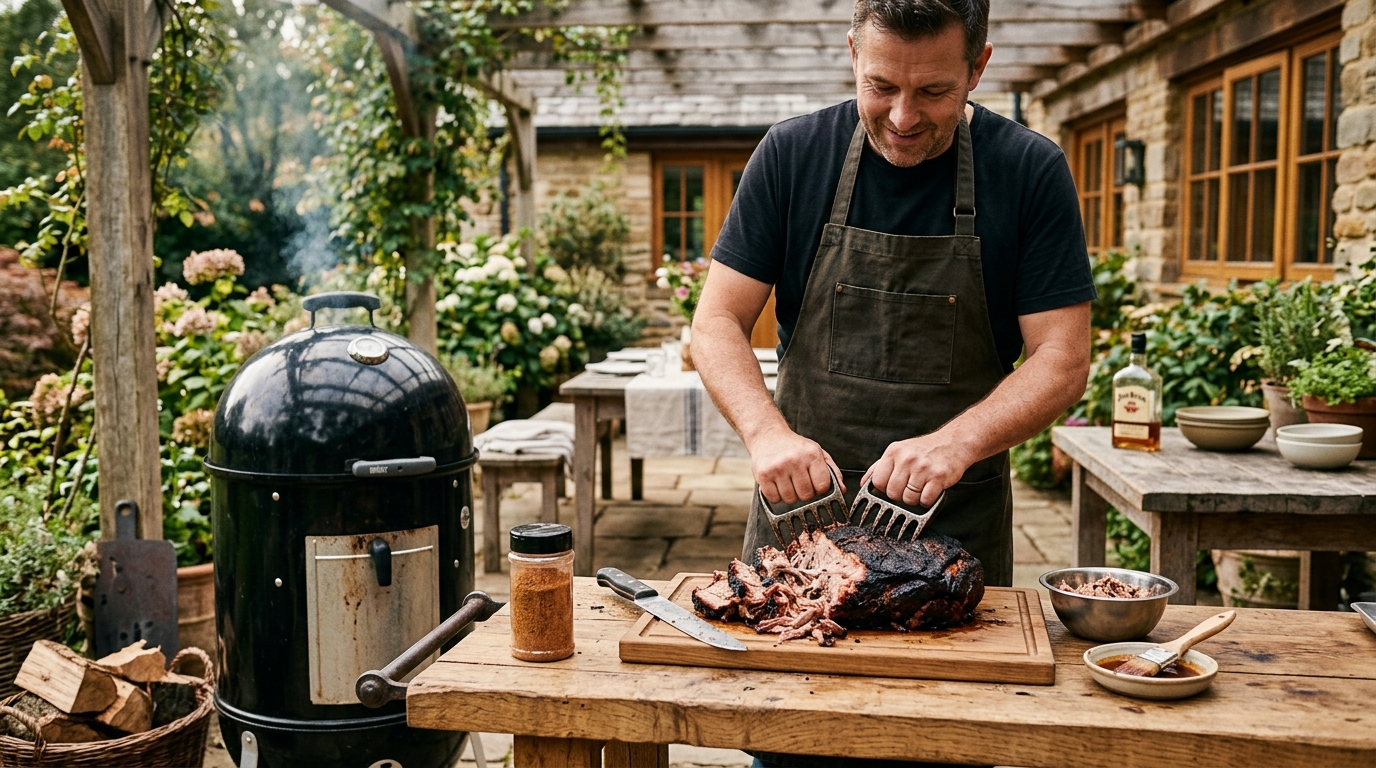
To make smoked pulled pork: smoke a bone-in pork butt at 225°F for 1 to 1.5 hours per pound — roughly 10 to 15 hours for a 10-pound shoulder — until the internal temperature reaches 200–205°F, then rest for 90 minutes before pulling. Apple or hickory wood, a solid dry rub applied the night before, and a patient rest turn a cheap cut into crowd-pleasing BBQ.
Which cut of pork is best for pulled pork?
Pulled pork comes from the upper shoulder of the pig, and three cuts from this primal all work — but they differ in fat content, cook time, and ease of handling.
| Product | Best for | Rating | Notes | |
|---|---|---|---|---|
| Bone-in pork butt (Boston butt) | Best flavor, beginner-friendly, most forgiving | ★★★★★ | The standard choice for smoked pulled pork. High intramuscular fat and collagen that renders into rich, moist meat. The bone acts as a built-in doneness indicator and adds flavor. Widely available and the best value per pound. | — |
| Boneless pork butt | Faster cook, uniform shape, easy injection | ★★★★☆ | Cooks slightly faster and more evenly without the bone altering heat distribution. Better surface area for bark coverage and easier to inject throughout. Requires close temperature monitoring without the bone doneness indicator. | — |
| Picnic shoulder | Deep flavor, budget cooks, large crowds | ★★★★☆ | The lower portion of the shoulder with more skin and collagen. Produces intensely flavored pulled pork but needs longer cooking. More irregular shape makes timing less predictable. Great for overnight cooks and large feeds. | — |
For most cooks, bone-in pork butt is the right starting point. It is the most forgiving cut on a long smoke, widely stocked at any grocery store or warehouse club, and delivers the best combination of price and flavor. A 10-pound bone-in butt — the sweet spot size — feeds 12 to 15 people after shrinkage and bone removal.
What you need to make smoked pulled pork
No specialized equipment is required beyond a smoker, but a few items separate consistent results from guesswork on a 12-hour cook.
Non-negotiable:
- A smoker, kettle grill, or gas grill capable of holding 225–250°F for 12+ hours
- A dual-probe digital thermometer — one probe at grate level to monitor pit temperature, one inserted in the meat throughout the entire cook
- Heavy-duty foil or unwaxed pink butcher paper for the wrap phase
- Heat-resistant gloves for safely handling a full 10-pound pork shoulder off a hot smoker
Highly recommended:
- A spray bottle for spritzing with apple juice or apple cider vinegar during the cook
- Meat shredding claws for fast, safe pulling after the rest
- An insulated cooler used as a resting chamber — it holds finished pork at serving temperature for up to 4 hours
The single most important tool is a reliable wireless thermometer. Guessing on a 12-hour cook leads to under-done or over-cooked results: wireless dual-probe BBQ thermometer on Amazon
Step 1: Build the dry rub
A great pulled pork rub does three jobs: it builds bark, seasons the meat through the outer layer, and adds a sweet-savory counterpoint to the smoke flavor. A standard base rub that works on any pork shoulder:
- 3 tablespoons brown sugar
- 2 tablespoons kosher salt
- 1 tablespoon coarse black pepper
- 1 tablespoon smoked paprika
- 1 teaspoon garlic powder
- 1 teaspoon onion powder
- 1 teaspoon chili powder
- 1/2 teaspoon cayenne pepper
This makes enough for one 10-pound bone-in pork butt with some extra for re-seasoning after pulling. Double the batch if making two butts.
For the best bark, apply the rub generously on all surfaces — top, bottom, sides, and inside any crevices. Use a thin coat of yellow mustard or olive oil as a binder first. It burns off completely during cooking and does not affect the flavor, but it helps the rub stick rather than falling off on the smoker grate.
Dry brine overnight. After applying rub, place the pork butt uncovered on a rack in the refrigerator for 8 to 12 hours. The salt draws surface moisture out, which then reabsorbs with dissolved salt over several hours. This dry-brining step seasons the meat more deeply than rub applied right before cooking and dramatically improves bark development — the two most important prep steps before the fire ever lights.
A ready-made competition pork rub: competition BBQ pork shoulder rub on Amazon
Step 2: Set up the smoker and choose your wood
Pull the pork butt from the refrigerator 30 to 45 minutes before cooking. Cold meat placed directly on a hot smoker extends the initial temperature climb unpredictably and creates uneven cooking from edge to center. While the shoulder rests, bring your smoker to 225°F and stabilize it before loading the meat.
Wood selection for smoked pulled pork:
Pork shoulder absorbs smoke over 12+ hours, which makes wood selection important — the wrong wood or too much of it produces bitter, astringent results.
- Hickory — the classic Carolina and Memphis BBQ choice. Bold, earthy, and deeply smoky. Excellent used alone or blended 1:1 with apple for a more balanced profile.
- Apple — mild, slightly sweet, and very forgiving. Produces a beautiful mahogany bark color without aggressive smoke. The safest choice for first-time cooks.
- Cherry — similar to apple with a slightly deeper sweetness and darker color. Excellent blended with hickory at a 1:1 ratio for competition-style depth and color.
- Pecan — nutty and rich, sitting between fruit woods and hickory in intensity. An underrated choice that complements pork fat particularly well.
Avoid mesquite for pulled pork — far too intense for a 12+ hour cook and produces bitter results.
Smoking wood chunks for pulled pork: hickory and apple wood chunks on Amazon
Step 3: Smoke the pork shoulder
Place the pork butt fat-side up on the smoker grate over indirect heat. Insert a leave-in temperature probe into the thickest part of the meat, positioned well away from the bone (bone contact throws off the reading). Close the lid and note your start time.
Hours 0–4 — Smoke absorption phase: Cold meat absorbs smoke most readily in the early hours before the exterior seals. Keep the smoker at a steady 225–250°F and add wood as needed to maintain a thin, clean blue smoke rather than thick white smoke. After the first 2 hours, begin spritzing the pork surface every 60 to 90 minutes with apple cider vinegar or a 50/50 mix of apple juice and vinegar. Spritzing cools the surface slightly, slows premature crust formation, and helps build a more deeply layered bark over time.
Resist opening the lid unnecessarily. Every lid opening costs 15 to 20 minutes of recovery time on a long cook.
Hours 4–8 — Bark development: The exterior darkens from a light mahogany to a deep, nearly black crust by this phase. The internal temperature climbs steadily until it enters the stall — typically somewhere between 155°F and 170°F — where it stops rising.
Step 4: Navigate the stall
The stall is the moment that catches most first-time pulled pork cooks off guard. At 155–170°F internal temperature, the thermometer stops climbing and may hold flat for 2 to 4 hours or more. This is normal physics — evaporative cooling from the pork surface exactly offsets the smoker heat input until enough surface moisture has cooked off.
Two options for handling the stall:
Wait it out. Keep the smoker at 225°F and let the stall resolve naturally. This takes the most time but produces the firmest, most deeply developed bark. Budget an additional 2 to 4 hours beyond the initial estimate when choosing this approach.
Wrap and push through (recommended for most cooks). When the internal temperature stalls, remove the pork butt and wrap it tightly in two layers of heavy-duty foil or a double layer of unwaxed pink butcher paper. Return to the smoker at 225–250°F. Wrapping stops the evaporative cooling and pushes the meat through the stall in 60 to 90 minutes instead of 2 to 4 hours.
Foil vs. butcher paper for the wrap:
- Foil seals completely and creates the most aggressive stall breakthrough with the softest, most fall-apart texture.
- Butcher paper is slightly more breathable, accelerates less than foil, and retains significantly more bark texture — the preferred choice for most competition-style and backyard cooks who prioritize crust.
Step 5: Pull from the smoker and rest
Once the internal temperature reaches 200–205°F, perform the probe test throughout the shoulder — slide a probe or skewer into the meat in multiple spots. It should meet near-zero resistance everywhere you test, comparable to probing warm butter. On bone-in cuts, grip the exposed bone and try to wiggle it: a finished shoulder lets the bone rotate freely and pull out cleanly with almost no effort.
The rest phase is not optional:
Wrap the finished shoulder tightly in butcher paper or foil, then wrap that bundle in two large kitchen towels, and place inside a lidded insulated cooler. Rest for a minimum of 60 minutes; 90 minutes to 2 hours produces noticeably juicier results. Resting allows the muscle fibers to relax and reabsorb juices that concentrated toward the center during cooking. A properly rested pork shoulder pulls apart effortlessly; one pulled immediately off the smoker tears rather than shreds and loses a pool of juice onto the cutting board.
A large lidded cooler doubles as a resting chamber and holds the shoulder at serving temperature for up to 4 hours — extremely useful when timing a cook to a specific mealtime.
Shredding the pork:
After resting, open the wrapping carefully — a significant amount of hot juice has collected inside. Remove the bone with a twist; it should come free with almost no effort. Shred the meat by hand, with two forks, or with a pair of meat claws. Remove any pieces of collagen or hard fat that did not render fully during the cook. Season the pulled pork lightly with a pinch of the original dry rub and a splash of apple cider vinegar to brighten the flavor and balance the richness.
Meat claws shred a 10-pound shoulder in under 3 minutes: BBQ meat shredding claws on Amazon
How to serve smoked pulled pork
Pulled pork is versatile enough to anchor a dozen different meals. The most common formats:
Classic pulled pork sandwiches. Pile pulled pork onto a toasted brioche or potato bun. Add coleslaw directly on the sandwich for crunch and contrast. Serve with pickles and sauce on the side. This format works for any crowd size from 10 to 100+.
BBQ plates. Serve pulled pork on a plate alongside two or three sides — traditional accompaniments include coleslaw, baked beans, mac and cheese, cornbread, and pickled onions. A 6-ounce serving is the standard portion for a plate meal.
Pulled pork tacos. Load small corn tortillas with pulled pork, pickled red onions, cilantro, and a squeeze of lime. Thin BBQ sauce or jalapeño hot sauce works as a drizzle. This format transforms leftover pulled pork into a completely different meal.
Pulled pork nachos. Pile pulled pork over tortilla chips with melted cheese, jalapeños, sour cream, and guacamole. An excellent use for the smaller, crisper pieces from the bark exterior.
BBQ sauce pairings for pulled pork
Eastern North Carolina vinegar sauce — apple cider vinegar, red pepper flakes, black pepper, and a touch of sugar with no tomato. Thin, sharp, and tangy. It cuts through pork fat and lets the smoke flavor lead. Penetrates the meat rather than coating it.
South Carolina mustard sauce — yellow mustard, cider vinegar, brown sugar, and spices. Sweet-tangy and bright. An excellent complement to smoked pork and very popular for sandwiches.
Kansas City tomato-based sauce — sweet, thick, and molasses-rich. The most universally familiar BBQ sauce style. Best served as a table sauce rather than mixed into the pulled pork, which can mask the smoke flavor.
For a large event, offering a vinegar sauce and a tomato sauce side by side satisfies both preference groups without controversy.
How to store and reheat smoked pulled pork
Storage: Refrigerate pulled pork in an airtight container for up to 4 days. For longer storage, freeze in 1-pound portions for up to 3 months. Add a splash of the cooking juices from the wrap into each container before sealing to prevent the pork from drying out.
Reheating: A low oven at 275°F is the best method. Place pulled pork in a covered Dutch oven or baking dish with about 1/4 cup of apple juice or chicken broth per pound of meat. Cover tightly and heat until warmed through — approximately 30 to 45 minutes for refrigerated pork. For smaller portions, a covered skillet over medium-low heat with a splash of liquid works in 5 to 8 minutes.
How much pulled pork to plan per person
Pulled pork yields approximately 50% of its raw weight after cooking, bone removal, fat trimming, and moisture loss.
- Sandwiches (4 oz serving): 1 pound raw pork butt per 3 people
- BBQ plates (6 oz serving): 1 pound raw pork butt per 2 people
- Mixed event: 1 pound raw per 2.5 people as a safe middle ground
For a party of 20 with sandwiches as the main: 20 people × 4 oz = 80 oz finished = 5 pounds pulled pork = 10 pounds raw pork butt. One 10-pound bone-in Boston butt handles this exactly.
FAQ
Frequently asked questions
How long does smoked pulled pork take to make?
What internal temperature is pulled pork done?
What is the stall and how do you get past it?
What is the best wood for smoked pulled pork?
How much pulled pork does a 10-pound pork butt yield?
Can you make smoked pulled pork on a gas grill?
How do you reheat smoked pulled pork without drying it out?
Bottom line
Smoked pulled pork is one of the most rewarding and crowd-friendly cooks in backyard BBQ — an inexpensive cut that transforms over 12 to 16 hours of low heat into something genuinely special. The fundamentals cover most of what separates great pulled pork from average: apply rub the night before, smoke bone-in pork butt at 225°F on apple or hickory wood, wrap tightly when the stall hits, pull at 200–205°F with probe tenderness confirmed everywhere, and rest for at least 60 minutes before shredding. Every shortcut in this process — skipping the overnight rub, skipping the rest, pulling too early — shows up clearly in the finished plate. Follow the process, and a 10-pound pork butt will feed 12 to 15 people something worth making again.
For related reading: how to smoke pork ribs: baby backs and spare ribs, how to use a smoker: complete beginner guide, best BBQ rubs for pork and beef, and how to smoke pork shoulder: timing, temps, and the stall.