guides
How to Smoke Pork Ribs: Step-by-Step Guide
Learn to smoke perfect pork ribs from rub to rest. Step-by-step technique for baby backs and spare ribs with timing, temps, and wood selection.
 Cole Whitaker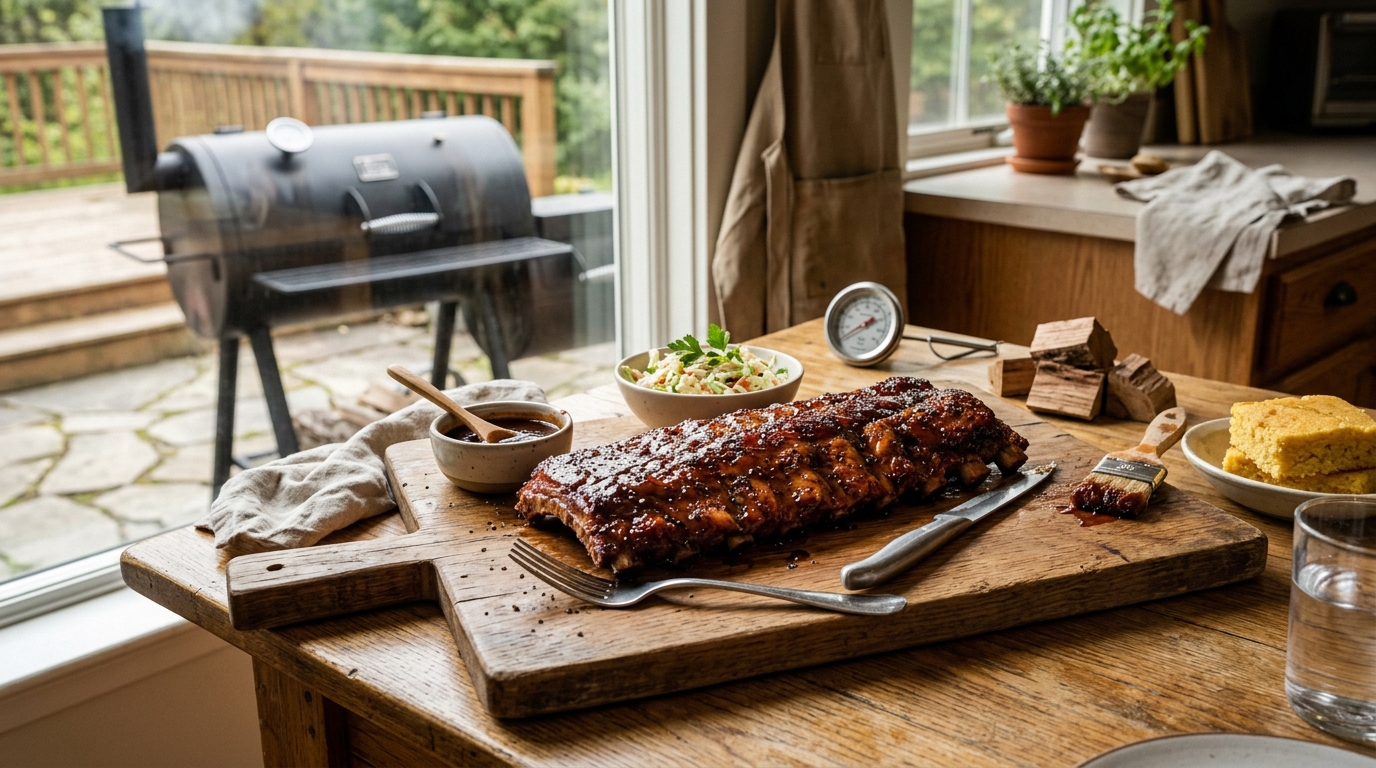
The best method for smoking pork ribs: run your smoker at 225°F, remove the membrane, apply a dry rub, and smoke baby back ribs for 4–5 hours or spare ribs for 5–6 hours. The 3-2-1 method — 3 hours naked, 2 hours wrapped, 1 hour sauced and unwrapped — delivers consistent, fall-off-the-bone spare ribs every time.
Baby backs, spare ribs, or St. Louis cut: which should you smoke?
Choosing the right rib cut changes both cook time and flavor profile. All three come from the same animal but from different parts of the ribcage.
| Product | Best for | Rating | Notes | |
|---|---|---|---|---|
| Baby back ribs | Shorter cooks, leaner meat, beginner-friendly | ★★★★☆ | Smaller, curved ribs from the upper back near the loin. Less fat, naturally more tender. Cook time: 4–5 hours at 225°F. Higher price per pound than spare ribs. | — |
| Spare ribs | Maximum flavor, value, feeding a crowd | ★★★★★ | Larger rack from the belly side. More fat and connective tissue that renders into rich, juicy meat. Cook time: 5–6 hours at 225°F. Lower cost per pound. | — |
| St. Louis cut ribs | Uniform shape, competition cooks, clean presentation | ★★★★☆ | Spare ribs trimmed of the sternum, cartilage, and flap for a neat rectangle. Same cook time as full spare ribs. The preferred cut for competition BBQ. | — |
For beginners, baby back ribs are the more forgiving starting point: shorter cook time, less fat to manage, and a narrower window for error. Once you are comfortable with the process, spare ribs and St. Louis cut offer deeper flavor and better value for large cooks.
Equipment you need
You do not need specialty equipment to smoke great ribs, but a few items make the process reliable and repeatable.
Non-negotiable:
- A smoker (any type — offset, pellet, kettle, or kamado all work)
- A dual-probe thermometer with one probe at grate level and one inserted between the rib bones near the end of the cook
- Heavy-duty aluminum foil or unwaxed butcher paper for the wrap phase
- Heat-resistant gloves
Helpful extras:
- A rib rack to stand the slabs upright and fit multiple racks on a crowded smoker grate
- A spray bottle with apple juice or apple cider vinegar for spritzing during the cook
- A silicone basting brush for applying sauce in the final stage
A reliable stainless rib rack: rib rack for smoker on Amazon
Step 1: Prep the ribs
Good smoked ribs start with 10 minutes of prep before the smoker ever turns on. Skip this step and the cook is already compromised.
Remove the membrane. Flip the rack bone-side up. You will see a thin, opaque white membrane stretched across the bones. Slide a butter knife or your fingertip under the membrane at one end of the rack, get a firm grip on it with a dry paper towel — it is slippery — and peel it off in one steady pull. This membrane remains tough regardless of cook time and blocks rub and smoke from penetrating the bone side of the rack.
Dry brine (optional but recommended). Sprinkle kosher salt lightly on both sides of the rack and refrigerate uncovered for 1 to 4 hours, or overnight. Dry brining draws surface moisture out, then reabsorbs it with dissolved salt, seasoning the meat more deeply than rub alone.
Apply the rub. Coat both sides of the rack with a thin layer of yellow mustard or olive oil as a binder — this helps the rub adhere and burns off cleanly without imparting flavor. Apply dry rub generously on all surfaces: top, bottom, and edges. A basic competition-style rub contains brown sugar, paprika, garlic powder, onion powder, kosher salt, black pepper, cayenne, and chili powder. Press the rub in firmly rather than rubbing it to avoid smearing it off the surface.
A ready-made competition rib rub: BBQ pork rib rub on Amazon
Let the ribs sit at room temperature while your smoker climbs to 225°F — about 20 to 30 minutes.
How to smoke baby back ribs: the 2-2-1 method
The 2-2-1 method delivers consistent baby back ribs in 5 hours: 2 hours naked on the smoker, 2 hours tightly wrapped, 1 hour unwrapped with optional sauce.
Phase 1 — Naked smoke (2 hours): Preheat the smoker to 225°F and add your chosen wood. Place the rack bone-side down on the grate. Smoke uncovered for 2 hours. After the first 60 minutes, begin spritzing every 45 to 60 minutes with apple juice or a 50/50 mix of apple juice and apple cider vinegar. This slows the exterior from drying out while the bark develops.
Phase 2 — Wrapped (2 hours): Remove the rack from the smoker and lay it on a large sheet of heavy-duty foil. Add 2 tablespoons of butter, a drizzle of honey, and a splash of apple juice to the foil. Wrap the ribs tightly, meat-side down. Return to the smoker at 225°F for 2 hours. The wrap creates a sealed, steaming environment that breaks down the remaining connective tissue and pushes the ribs to tender.
Phase 3 — Unwrapped (1 hour): Carefully open the foil — the liquid inside is very hot. Remove the ribs and return them to the grate bone-side down. Discard the foil liquid or save it as a finishing sauce base. Cook unwrapped for 45 to 60 minutes to firm the bark. If saucing, apply a thin coat of BBQ sauce with a basting brush in the last 20 minutes and let it set and caramelize.
How to smoke spare ribs: the 3-2-1 method
The 3-2-1 method was designed specifically for spare ribs and consistently delivers fall-off-the-bone results. Total time: 6 hours.
Phase 1 — Naked smoke (3 hours): Set the smoker to 225°F and add apple, cherry, or pecan wood. Place the racks bone-side down. Smoke uncovered for 3 hours, spritzing every 60 minutes after the first hour. During this phase, the bark forms, the smoke ring develops, and the exterior dries slightly to build texture.
Phase 2 — Wrapped (2 hours): Wrap tightly in heavy-duty foil with butter, honey, and apple juice as with baby backs. Return to the smoker at 225°F for 2 hours. The higher fat content and more connective tissue in spare ribs need this extended wrapped phase to render fully.
Phase 3 — Unwrapped (1 hour): Remove from the foil and return to the grate for 45 to 60 minutes to firm the bark. Apply BBQ sauce in the final 20 minutes if desired. The rack is done when the meat has pulled back visibly from the bone tips and a probe slides between the bones with almost no resistance.
Choosing the right wood for pork ribs
Pork ribs take smoke more readily than beef brisket, which makes wood selection important — the wrong wood or too much of it overwhelms the meat.
Best choices for ribs:
Apple wood is the top pick for ribs. Mild, slightly sweet, and it produces a beautiful mahogany color on the bark without any risk of over-smoking. Apple is forgiving and works at any stage of the cook.
Cherry wood is similar to apple in smoke intensity, with a slightly deeper and more complex sweetness. It produces a rich, dark red color on the bark that is visually stunning. Often blended with apple for the best combination of color and flavor.
Pecan is slightly stronger than apple or cherry, with a nutty richness that pairs perfectly with pork. A good middle-ground between mild fruit woods and bold hickory; excellent when you want more depth without going full hickory.
Use with caution:
Hickory works well on ribs in moderate amounts and is the classic American BBQ choice, but a full 3-hour naked smoke with hickory alone can cross into overpowering. Blend hickory with apple or cherry at a 1:2 ratio for a better balance.
Mesquite burns intensely hot and produces aggressive earthy smoke. It is too intense for a 5 to 6 hour rib cook and will produce bitter results. Reserve it for hot-and-fast beef cooks.
For offset smokers, use splits 3 to 4 inches in diameter. For pellet smokers, use apple, cherry, or competition blend pellets. For kettle or kamado grills, use fist-sized wood chunks placed directly on lit coals.
A variety pack of smoking wood chunks: cooking wood chunks variety pack on Amazon
How to tell when smoked ribs are done
Unlike brisket or pork shoulder, ribs do not have a reliable target internal temperature. The connective tissue renders across a range rather than at a specific number, and the small bones throw off probe readings. Use these three indicators instead.
The pullback test. The meat should pull back cleanly from the bone tips by at least 1/4 inch. If the meat is still flush with the bone ends, the ribs need more time.
The probe test. Insert a toothpick or the probe from an instant-read thermometer between two bones in the center of the rack. It should slide in with almost no resistance — comparable to probing warm butter. Any stiffness means more time is needed.
The bend test. Pick up the rack from one end with tongs. A properly cooked rack bends significantly at the center, and the bark cracks slightly across the top when you bounce it gently. Rigid ribs are undercooked. A rack that flops in half and the meat falls away from the bone is overcooked.
Use all three tests together. Do not rely on time alone — smoker temperature variation, rack size, and starting meat temperature all affect the actual cook time.
To sauce or not to sauce?
This is a matter of preference and regional tradition. Central Texas-style ribs are served with no sauce and rely entirely on the bark, smoke, and natural pork flavor. Kansas City-style ribs are glazed and heavily sauced. Both approaches are legitimate.
If saucing, wait until the last 20 to 30 minutes of the cook. Most commercial BBQ sauces contain significant sugar — applied too early, the sugars burn to carbon before the ribs are done. Apply a thin coat with a brush, let it set for 10 minutes, then apply a second coat. Two thin coats produce a glossy, sticky glaze; one heavy coat often produces a gummy texture.
If going unsauced, let the ribs develop a full crust during the unwrapped phase. Serve sauce on the side for guests who want it. Dry-rubbed ribs with a properly developed bark need no sauce at all.
Common mistakes when smoking pork ribs
Skipping the membrane removal. The membrane on the bone side turns rubbery and tough at any cook temperature and blocks rub and smoke from penetrating the underside. Remove it every time before applying rub.
Running the smoker too hot. Ribs at 275°F or higher cook faster but the fat does not render as smoothly, and the texture suffers. 225°F is the standard for a reason.
Over-saucing too early. Sauce applied more than 30 minutes before pulling produces a burnt, bitter glaze. The last 20 to 30 minutes is the window.
Skipping the wrap. Some pit masters smoke ribs without wrapping for firmer, competition-style texture and stronger bark. This works but narrows the margin for error significantly. For consistent fall-off-the-bone results, wrap at the right time.
Cutting immediately after pulling. Let the rack rest on a cutting board for 10 minutes before slicing. The fibers firm slightly after resting and the cuts are cleaner and more uniform.
FAQ
Frequently asked questions
How long does it take to smoke pork ribs?
What temperature should ribs be smoked at?
Do you flip ribs when smoking?
What wood is best for smoking pork ribs?
Should you wrap ribs in foil or butcher paper?
How do you know when smoked ribs are done?
Can you smoke ribs on a gas grill or kettle grill?
Bottom line
Smoking great pork ribs requires patience more than advanced technique. The fundamentals cover most of what separates good ribs from great ones: remove the membrane, apply a thorough rub, run the smoker steady at 225°F, follow the 3-2-1 or 2-2-1 method for the wrap phase, and hold off on sauce until the last 30 minutes. Choose apple or cherry wood to start, stay patient through the wrap phase, and use all three doneness tests rather than relying on time alone. Baby back ribs are the most approachable entry point; once the process is comfortable, spare ribs and St. Louis cut deliver deeper flavor and better per-serving value.
For related reading: how to use a smoker: complete beginner guide, best smokers at every price point, best BBQ rubs for pork and beef, or best instant-read thermometers for BBQ and grilling.