roundups
Best BBQ Rubs of 2026
The best BBQ rubs of 2026: competition-grade dry spice blends ranked for bark, flavor depth, and versatility across pork, beef, and poultry.
 Cole Whitaker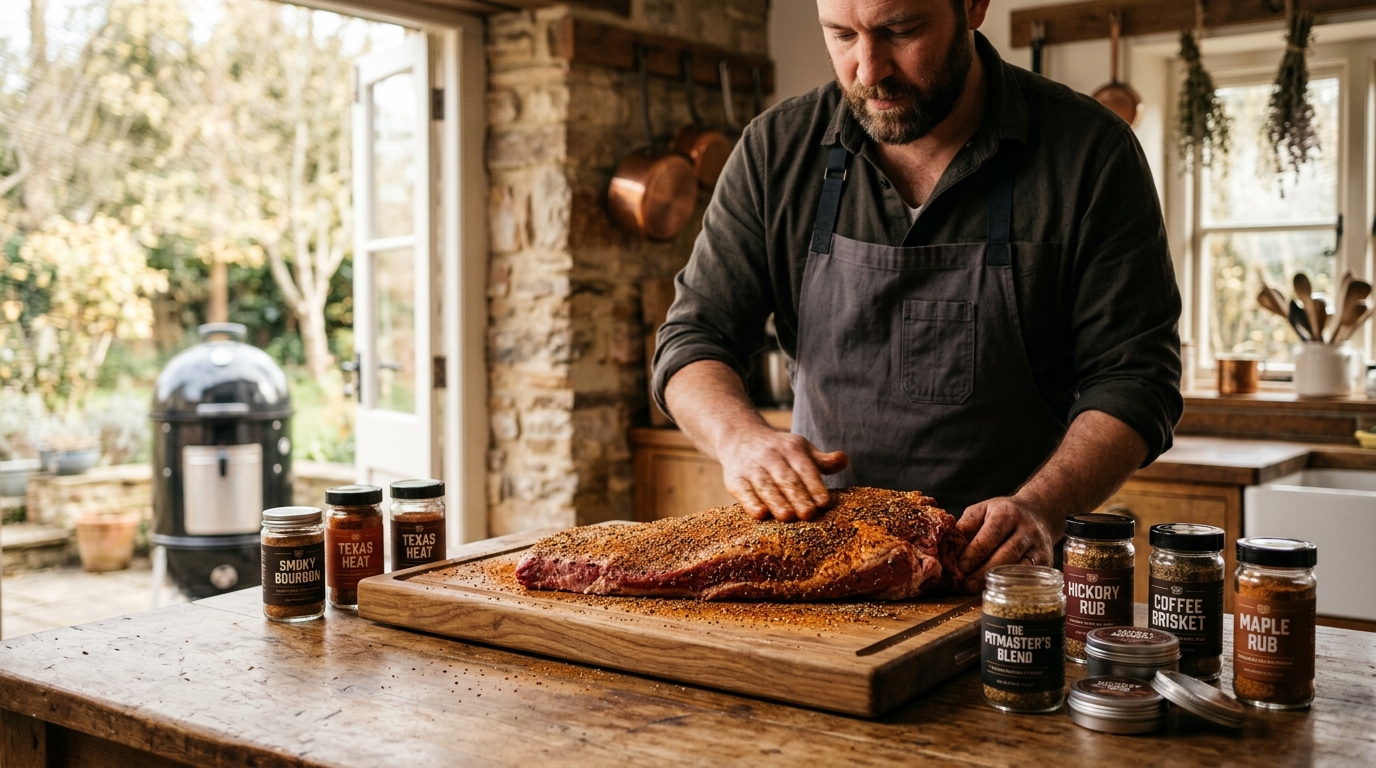
A mediocre rub disappears into the cook. A great rub builds bark — that mahogany-colored, slightly firm exterior crust on a brisket or pork shoulder that concentrates flavor and delivers textural contrast with every bite. Bark formation is chemistry: the Maillard reaction between amino acids and reducing sugars in the rub creates the complex, savory-sweet crust during a low-and-slow cook. Get the rub right and bark happens automatically. Get it wrong — wrong sugar-to-salt ratio, brown sugar that burns before the meat renders, granule size that won’t hold smoke — and you end up with a gray exterior that tastes like the spices fell off during the cook.
Most rubs fall into two philosophies. Competition-style rubs are built for immediate impact: higher sugar for a dark, dramatic bark; sweet-forward flavor that lands in a single bite from a styrofoam cup. Pitmaster and backyard rubs are built for eating: balanced salt, less aggressive sweetness, flavor that develops across a full plate over multiple bites. The best rubs thread both — competition-level bark formation with flavor calibrated for sustained eating. This guide covers the best rubs across categories, what makes each one work at the chemistry level, and which meat they serve best.
Quick comparison
| Product | Best for | Rating | Notes | |
|---|---|---|---|---|
| Killer Hogs The BBQ Rub | best overall; competition-grade bark on pork, chicken, and beef | ★★★★★ | $11-15 for 16oz. Sweet-savory balance. Malcolm Reed's competition recipe. | Check price |
| Bad Byron's Butt Rub | best for pork; salt-forward, low-sugar, deep bark on long cooks | ★★★★★ | $12-18 for 26oz. No refined sugar. High value per ounce. | Check price |
| Hardcore Carnivore Black | best for brisket and beef; activated charcoal builds dramatic dark bark | ★★★★★ | $14-18 for 12oz. Charcoal-based. No sugar to burn at high temp. | Check price |
| Traeger Pork & Poultry Seasoning | best everyday rub; accessible flavor, consistent results for beginners | ★★★★★ | $10-15 for 9oz. Apple and honey notes. Available at most hardware stores. | Check price |
| Plowboys Yardbird Rub | best for chicken and ribs; competition sweet-heat developed on the KCBS circuit | ★★★★★ | $12-16 for 14oz. Award-winning recipe. Works on pork ribs and pulled pork too. | Check price |
The picks
Best overall: Killer Hogs The BBQ Rub
Best for anyone who wants a proven competition formula that produces excellent bark and flavor across multiple protein types without needing a separate rub for each
Killer Hogs The BBQ Rub
Malcolm Reed of the Killer Hogs competition team developed this rub for KCBS circuit events and it's been his on-air recipe on HowToBBQRight for years — the same formula you see producing mahogany brisket slices and pull-apart pork shoulders in the videos is the formula in the jar. The balance is tuned specifically for bark: fine-granule brown sugar for fast crust formation, kosher salt at a ratio that seasons without oversalting on a per-pound basis, paprika for color and mild sweetness, and garlic and onion powders for savory depth. The sugar-to-salt ratio is higher than a traditional Texas-style rub, which makes it lean sweet at first taste from the jar — but on meat after a low-and-slow cook, the sweetness tempers and the bark takes on the complex, slightly smoky caramelized character that judges mark high at competitions. At $11-15 for 16oz, it's one of the better-value rubs at this quality tier. Killer Hogs works well on everything: pork shoulder, ribs, chicken thighs, and brisket. If you want one rub that covers every protein without compromise, this is the pick.
★★★★★ 4.8 · 12,400 reviews
Check current price on Amazon→Pros
- Competition-tested formula from KCBS circuit — real pedigree, not marketing language
- Fine sugar granules create bark faster than coarser rubs; bark formation begins before the stall
- Versatile across pork, chicken, and beef — one jar covers the full season
- Well-calibrated salt level; seasons effectively without oversalting on a 1/4-inch application
- $11-15 for 16oz is strong value for a competition-grade product
Cons
- Sweeter than a Texas-style rub — brisket purists who prefer salt-and-pepper may find it too forward
- Brown sugar content can scorch on direct high-heat grilling above 350°F; best for low-and-slow
- Some cooks find the garlic powder level aggressive on delicately flavored cuts like fish
Best for pork: Bad Byron’s Butt Rub
Best for pork-focused pitmasters who want a salt-forward, savory rub that builds dark bark through seasoning and smoke rather than caramelized sugar
Bad Byron's Butt Rub Barbecue Seasoning
Bad Byron's Butt Rub is one of the enduring workhorses of the competition BBQ world — a rub built around salt, paprika, and a proprietary spice blend without the refined sugar base that defines most competition rubs. The result is a bark that develops through the Maillard reaction and smoke adhesion rather than caramelization, which produces a different flavor profile: deeper, more savory, with red pepper heat that builds toward the end. The absence of refined sugar also means Butt Rub performs consistently across a wider temperature range. On a pork shoulder at 225°F for 14 hours, the bark is firm and deeply colored without the sticky, syrupy exterior that some high-sugar rubs produce. On ribs at 275°F, there's no risk of the surface burning before the interior renders. At $12-18 for 26oz, the per-ounce cost is among the lowest of any premium rub — an important consideration when coating a full pork shoulder at the recommended 1/4-inch application rate. If pork is the primary protein and you want bark from seasoning depth rather than caramelized sweetness, Butt Rub is the clearest choice.
★★★★★ 4.7 · 8,100 reviews
Check current price on Amazon→Pros
- No refined sugar — works at higher temperatures without burning, consistent bark across 225°F-300°F
- Excellent per-ounce value at $12-18 for 26oz — important when applying generously to large cuts
- Salt and paprika base builds deep bark through smoke adhesion, not just caramelization
- Mild-to-medium heat profile that reads as savory rather than spicy at normal application rates
- Long track record in the competition BBQ community — proven at scale under judging conditions
Cons
- Less suited to chicken than a sweeter rub — poultry benefits from sugar content that Butt Rub lacks
- Not as versatile across proteins as Killer Hogs; primarily shines on pork shoulder and ribs
- Salt level is high — reduce application rate by 20% on thinner cuts like pork tenderloin
Best for brisket: Hardcore Carnivore Black
Best for brisket and beef-focused smokers who want a visually dramatic, deeply savory bark with zero risk of sugar burning during a long cook
Hardcore Carnivore Black BBQ Seasoning
Hardcore Carnivore Black is the most visually distinctive rub in the category, built around activated charcoal, salt, pepper, and garlic without any sugar to interfere with a high-heat or long-duration cook. The charcoal is the signature: it darkens the bark to near-black before the cook even starts, creating a post-cook exterior that looks like 14 hours in a stick-burner whether you're on a pellet grill or a drum smoker. More importantly, the absence of sugar means zero scorching risk — on a brisket at any temperature between 225°F and 350°F, the exterior never goes bitter from burned sugar. The flavor is beef-forward: salt and coarse black pepper at the center of the profile, with garlic depth and a subtle earthiness from the activated charcoal itself. It reads as a more complex version of the classic central Texas salt-and-pepper brisket rub, which is exactly what it's designed to be. The 12oz jar runs $14-18, which makes it the highest per-ounce cost in this guide, but brisket application rates are lower than pork (less surface area per pound), so a jar goes further than the size suggests. Best paired with post-oak or hickory smoke on beef.
★★★★★ 4.7 · 5,600 reviews
Check current price on Amazon→Pros
- Activated charcoal creates visually dramatic dark bark before the cook begins
- No sugar means zero scorching risk at any temperature — consistent results across grill types
- Salt-pepper-garlic flavor profile complements beef without masking the meat itself
- Works identically on pellet grills, offset smokers, and drum smokers — no method-specific tweaks needed
- Stands up to long 12-16 hour brisket cooks without flavor degradation from extended heat
Cons
- The activated charcoal darkens rub-adjacent surfaces — hands, cutting boards, and aprons stain visibly
- $14-18 for 12oz is the highest per-ounce cost in this guide
- Not suited to chicken or lighter proteins where the visual and flavor intensity reads as overwhelming
- Purists may find the charcoal addition unnecessary if they achieve dark bark naturally on a stick-burner
Best everyday rub: Traeger Pork & Poultry Seasoning
Best for everyday backyard cooks and beginners who want a well-calibrated, widely available rub that produces reliable results across chicken and pork without dialing in application rate or timing
Traeger Grills Pork & Poultry BBQ Rub Seasoning
Traeger's Pork & Poultry Seasoning is the rub most likely to be in stock at a local hardware or outdoor retailer the day before a cookout, and it earns the shelf space with performance that matches its accessibility. The flavor profile centers on apple and honey sweetness undercut by savory onion and garlic — a combination calibrated for the pellet grill demographic: apple or cherry wood smoke, pork shoulder at 225°F, and a family dinner that needs to taste good without six hours of recipe development. The salt level is conservative, which means it's forgiving at the application rates that beginners typically use (too heavy a hand on a high-sodium rub oversalts a piece of chicken in ways that can't be fixed mid-cook). The sugar level is moderate, building bark without the scorching risk that comes with high-sugar competition rubs on the same hotter pellet grill settings. At $10-15 for 9oz, it's not the best per-ounce value, but it's priced for impulse purchase and delivers consistent results that build cook confidence. For experienced pitmasters it's a competent everyday rub; for beginners it's a no-mistake starting point.
★★★★★ 4.6 · 9,700 reviews
Check current price on Amazon→Pros
- Available at Traeger dealers, hardware stores, and big-box retailers — no online-only ordering
- Conservative salt level is forgiving for beginners learning application rates
- Apple-honey sweetness pairs naturally with apple, cherry, and maple pellet wood flavors
- Consistent batch-to-batch quality from a major manufacturer — no variability between jars
- Works as a finishing seasoning on pulled pork and shredded chicken, not just a pre-cook rub
Cons
- Flavor profile is apple-sweet and single-dimensional compared to competition-grade rubs
- $10-15 for 9oz is the worst per-ounce value in this guide
- Conservative seasoning means it doesn't distinguish itself on beef or lamb the way pork-specific rubs do
- Experienced pitmasters may find the flavor too mild without supplemental seasoning layers
Best for chicken and ribs: Plowboys Yardbird Rub
Best for chicken and pork rib specialists who want a sweet-heat competition profile that holds up to judging-level scrutiny and translates directly to backyard cooking
Plowboys BBQ Yardbird Rub
Plowboys BBQ is a Kansas City-based competition team that's won multiple KCBS championships, and Yardbird Rub came out of that competitive context — specifically designed for chicken categories where judges look for caramelized, mahogany-colored skin with clear flavor definition in a single bite. The formula is sweet-heat: brown sugar and paprika for color and bark, cayenne and black pepper for a heat finish that builds after the initial sweet note, and celery salt for a savory foundation. On chicken thighs at 325°F, the skin caramelizes to a deep amber rather than burning, and the flavor reads as intentional rather than generic. The same sweet-heat profile translates well to pork ribs — baby backs at 250°F develop a shiny, slightly sticky bark with visible mahogany color that looks competition-ready without significant coaching. At $12-16 for 14oz, Yardbird is priced toward the higher end of the guide but represents genuine competition pedigree. For anyone who predominantly cooks chicken and pork ribs and wants their results to look and taste competitive, this is the rub to start with.
★★★★★ 4.7 · 7,200 reviews
Check current price on Amazon→Pros
- KCBS championship-winning formula specifically developed for chicken competition judging criteria
- Sweet-heat balance builds caramelized, mahogany-colored skin without burning at 300-325°F
- Celery salt base adds savory complexity that separates it from one-dimensional sweet rubs
- Works on baby back ribs with the same results as chicken — versatile within the pork category
- Cayenne heat is present but measured — adds finish without overpowering the sweet profile
Cons
- Sugar content is high — monitor temperature closely above 325°F or the skin will go dark to burned
- Sweet profile doesn't translate as well to beef as to chicken and pork
- Per-ounce cost is moderate-to-high at $12-16 for 14oz
- Not the right pick if you dislike sweet-forward flavor profiles — the sweetness is the design, not a flaw
What to skip
Generic grocery store “BBQ seasoning.” The $3 jar at the end of the spice aisle lists salt as the first ingredient and uses artificial smoke flavor as a shortcut for the flavor development that happens during an actual cook. These products season the surface adequately for a hamburger patty on a gas grill at 500°F. For any low-and-slow cook where the rub needs to build bark over 6-14 hours, the formula is wrong — the salt-to-spice ratio is designed for quick cooking, and the artificial smoke flavor burns off at low temperatures rather than integrating into the bark. Spend $12-18 on a purpose-built rub.
Rubs with anti-caking agents in the top five ingredients. Silicon dioxide and tricalcium phosphate improve shelf life and prevent clumping in the jar, which is a real manufacturing convenience. They also mean a higher proportion of the jar is non-flavor filler. Rubs formulated for cooking rather than shelf appearance keep anti-caking agents out of the top five — the product may clump slightly in humid conditions, but it’s more rub and less agent per dollar.
Pre-mixed “all-in-one” seasoning kits with separate injector packets. These kits pitch convenience, but the rub and injection marinade are typically formulated to work together in a specific way (matching salt levels, same flavor profile), which limits creative latitude and often means the rub is calibrated primarily for the injection use case rather than as a standalone bark-building seasoning. Buy your rub and injection marinade separately from specialists who optimize each product independently.
FAQ
Frequently asked questions
How do I apply a dry rub correctly?
How long should a dry rub sit on meat before cooking?
What's the difference between a competition rub and a backyard rub?
Does a dry rub work the same on a pellet grill vs an offset smoker?
How much rub should I use per pound of meat?
Can I make a better BBQ rub at home than what I can buy?
Bottom line
Best overall: Killer Hogs The BBQ Rub ($11-15 for 16oz) for competition pedigree and genuine versatility across every protein you’ll smoke this season. Best for pork: Bad Byron’s Butt Rub ($12-18 for 26oz) for bark built from salt and smoke rather than caramelized sugar, with the best value-per-ounce in the guide. Best for brisket: Hardcore Carnivore Black ($14-18 for 12oz) for a sugar-free, activated-charcoal bark that produces dramatic visual and flavor results on beef without scorching risk. Best everyday rub: Traeger Pork & Poultry ($10-15 for 9oz) for consistent, forgiving results at a store you can visit the day before a cookout. Best for chicken and ribs: Plowboys Yardbird ($12-16 for 14oz) for a sweet-heat competition formula that makes chicken skin look and taste like it took real effort.
None of these require modification to produce excellent results out of the jar. Pick one, learn how it behaves on your specific smoker, and adjust from there.
Round out the smoking and grilling setup: best smokers, best charcoal grills, best grill thermometers, or best meat injectors.