comparisons
Smoked vs Grilled Chicken: Which Method Wins?
Smoked chicken develops deep wood flavor and bark; grilled chicken gets charred skin in under 30 minutes. Here is exactly when to use each method.
 Cole Whitaker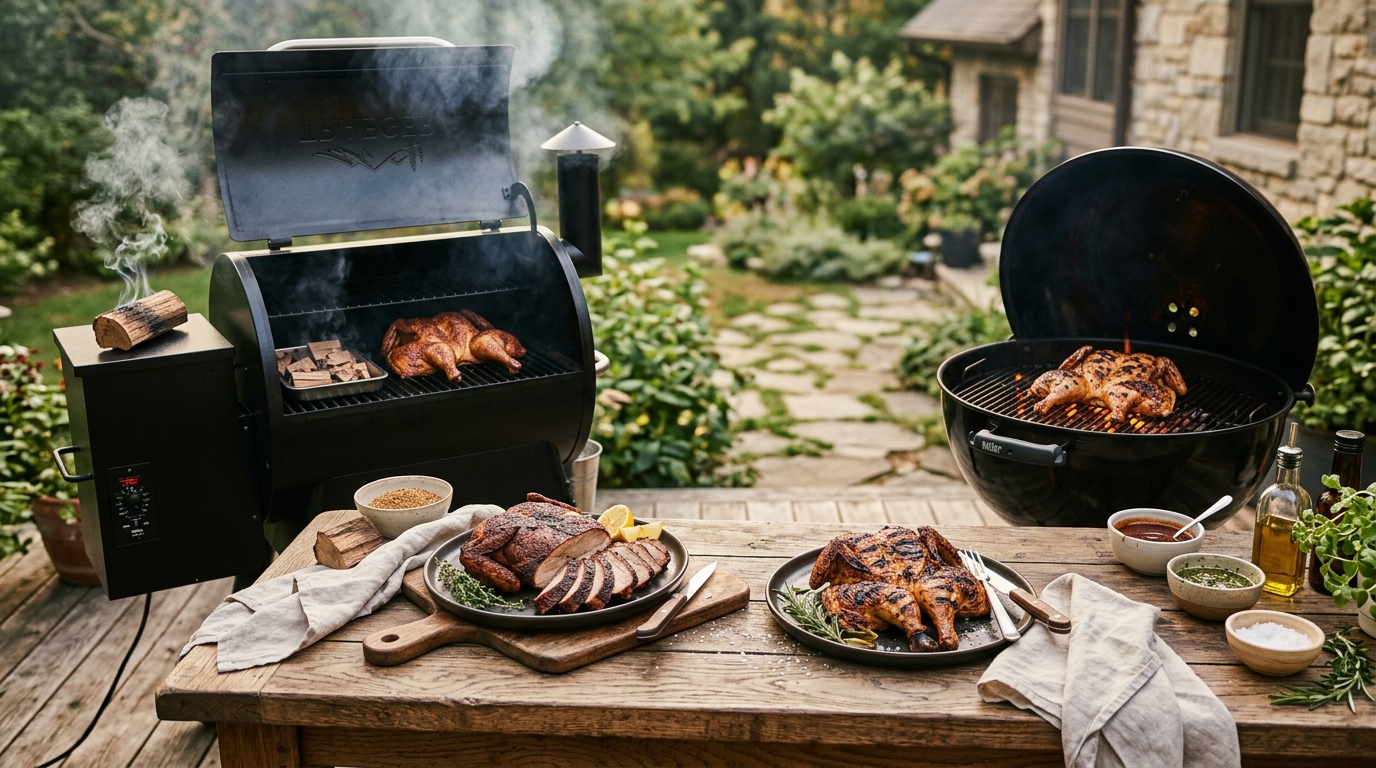
Smoked vs grilled chicken verdict: Smoke chicken when deep wood flavor, juicy tender meat, and low-effort entertaining are the goal — plan 3 to 4 hours at 225-250°F. Grill chicken when crispy charred skin and a fast weeknight meal matter more — direct heat gets bone-in pieces on the table in under 30 minutes.
How smoking and grilling chicken compare across 8 key dimensions
| Product | Best for | Rating | Notes | |
|---|---|---|---|---|
| Smoke flavor depth | Smoker: 9/10. Charcoal grill: 4/10. Gas grill: 2/10. | — | Real wood combustion in a smoker penetrates chicken meat over 3-4 hours of exposure. A charcoal grill adds surface char flavor but cannot develop deep smoke penetration in a 25-minute cook. | — |
| Active cook time | Grill: 20-35 minutes. Smoker: 3-4 hours for a whole bird. | — | Grilling chicken pieces takes under 35 minutes. A smoked spatchcocked bird takes 2.5-3 hours; a whole bird at 225°F takes 3.5-4.5 hours depending on weight. | — |
| Skin texture | Grill: crispy and charred. Smoker: tender and mahogany-colored. | — | High direct heat on a grill renders and crisps chicken skin in minutes. Low smoker temperatures keep skin tender — cranking to 325°F for the last 20 minutes firms and colors the skin. | — |
| Meat moisture retention | Smoker: excellent. Grill: moderate with attention. | — | The slow moist heat of a smoker at 225°F keeps chicken remarkably juicy throughout. High grill heat dries out breast meat quickly if the cook runs even 5 minutes past target temperature. | — |
| Best cuts for method | Smoker: whole birds, thighs, legs. Grill: breasts, wings, spatchcocked halves. | — | Chicken thighs have enough intramuscular fat to stay moist during 3-4 hours at low temperature. Breasts have very little fat and perform far better over fast, hot grill heat. | — |
| Equipment required | Grill: any charcoal or gas grill. Smoker: dedicated unit or modified kettle. | — | Any backyard grill handles chicken. A Weber Smokey Mountain, Traeger pellet smoker, or a Weber Kettle with a two-zone setup each serve as capable chicken smokers. | — |
| Hands-off convenience | Pellet smoker: 9/10. Gas grill: 8/10. Charcoal smoker: 6/10. | — | A pellet smoker maintains temperature automatically — set it and walk away for 3 hours. Grilling needs consistent monitoring to prevent flare-ups from chicken fat dripping onto coals. | — |
| Serving impressiveness | Smoker: visually dramatic. Grill: quick and casual. | — | A smoked whole chicken with dark bark and a rosy smoke ring is a centerpiece dish for guests. Grilled pieces work for casual weeknight dinners when timing and speed take priority. | — |
When to smoke chicken
Smoking chicken is the right call when you have time to plan and want maximum flavor payoff. The low-and-slow environment of a smoker transforms chicken in ways no other method matches: the skin develops a mahogany color and thin bark, the meat builds a faint smoke ring just below the surface, and the internal fat renders gently, keeping even a large whole bird remarkably juicy.
Best cuts for the smoker
Whole birds are the showpiece of smoked chicken. A 4-pound bird at 225°F takes 3.5 to 4.5 hours. Spatchcock the bird — remove the backbone and press flat — and that drops to 2.5 to 3 hours at 275°F while improving smoke penetration and skin crispness.
Bone-in thighs and leg quarters are the most forgiving cut for smoking beginners. The high fat content and connective tissue in thighs mean there is a wide window between 165°F (safe) and 185°F (ideal for pull-apart texture) where the meat only improves. Plan 1.5 to 2.5 hours at 250°F for a full tray.
Drumsticks smoke beautifully at 250°F in about 1.5 to 2 hours and are ideal for feeding a crowd economically.
Wood selection for smoked chicken
Chicken is a mild protein that pairs well with lighter fruit woods:
- Cherry wood — produces a rosy mahogany color and mild sweetness, the most popular choice for whole birds
- Apple wood — even milder and slightly sweeter than cherry, excellent for thighs and drumsticks
- Hickory — adds assertive smoke flavor; use sparingly, blended with cherry or apple
- Pecan — a middle-ground option, more robust than apple but gentler than hickory
Avoid mesquite for chicken. Its intense smoke compounds work on beef brisket but become acrid on the milder protein over a long cook.
Smoker temperature guide for chicken
| Cut | Temperature | Time | Pull Target |
|---|---|---|---|
| Whole bird | 225-250°F | 3.5-4.5 hours | 165°F breast, 175°F thigh |
| Spatchcocked bird | 275-300°F | 2-2.5 hours | 165°F breast, 175°F thigh |
| Bone-in thighs | 250°F | 1.5-2.5 hours | 180-185°F for best texture |
| Leg quarters | 250°F | 2-2.5 hours | 175-180°F |
| Drumsticks | 250°F | 1.5-2 hours | 175°F, then direct for crispness |
Best for Dedicated low-and-slow chicken smoking with real wood smoke flavor
Weber Smokey Mountain 18-Inch Charcoal Smoker
The benchmark backyard charcoal smoker. The bullet design maintains 225-275°F for 6-plus hours on a single load of charcoal. The water pan keeps the smoke environment moist, which is the reason smoked chicken comes out so juicy. Two grate levels let you run a whole bird above and a tray of thighs below simultaneously.
★★★★★ 4.7
Check current price on Amazon→Pros
- Holds 225-275°F for 6-plus hours without refueling on a full charcoal load
- Water pan creates a moist smoke environment that keeps chicken juicy throughout the cook
- Two cooking grates fit a whole bird plus a full tray of thighs simultaneously
- Weber build quality means this smoker lasts 15-plus years with minimal maintenance
Cons
- No built-in temperature controller — fire management experience required
- Longer prep and ash cleanup compared to a pellet smoker
- Does not double as a high-heat grill for direct searing
Best for Set-and-forget smoked chicken with digital temperature precision
Traeger Pro 22 Wood Pellet Grill and Smoker
Set the digital controller to 225°F and walk away — the Traeger feeds cherry or apple pellets automatically to hold temperature for the entire cook. No charcoal management, no babysitting. The WiFIRE app lets you monitor internal temperature from inside the house. The best option for smoking chicken without learning fire management.
★★★★★ 4.6
Check current price on Amazon→Pros
- Digital controller maintains precise temperature automatically — no fire management skill required
- Compatible with fruit wood pellets (cherry, apple) that produce outstanding chicken flavor
- WiFIRE app enables temperature monitoring from inside the house during long cooks
- Also functions as a grill for higher-heat cooking up to 450°F
Cons
- Higher entry cost than a charcoal smoker at the same quality tier
- Requires electricity and wood pellets — both are ongoing costs
- Smoke flavor is slightly less intense than a well-managed charcoal smoker
When to grill chicken
Grilling chicken is the right call when speed, crispy skin, and weeknight practicality matter more than deep smoke penetration. A properly grilled chicken piece — finished at 165°F with charred skin and rendered fat — is a genuinely excellent result that takes 25 minutes from cold grill to plate.
Best cuts for the grill
Boneless skinless breasts are the weeknight workhorse. Pound to even thickness (about 3/4 inch) to prevent the thicker end being raw while the thin end dries out. Grill over direct medium-high heat for 6 to 8 minutes per side, then rest 5 minutes before cutting.
Wings are ideal on the grill. Start on the indirect zone for 18 to 20 minutes to render the fat, then move to direct heat for 3 to 4 minutes per side to crisp and char. This two-stage method produces wings that are fully cooked through with genuinely crispy skin.
Bone-in thighs are the most forgiving cut on the grill. The fat content protects against overcooking. Grill skin-side down over direct medium heat for 6 to 7 minutes to render and crisp the skin, then flip and cook another 6 to 8 minutes until 165°F internal.
Spatchcocked halves are the best option when you want to grill a whole chicken without uneven cooking. Split the backbone-removed bird in half, flatten each piece, and grill two-zone: indirect for 20 minutes, then direct for 5 minutes per side to finish.
The two-zone grilling method for chicken
The biggest mistake when grilling chicken is using high direct heat for the entire cook — skin burns before the interior reaches temperature. The two-zone method fixes this:
- Build a hot zone on one side (all burners on for gas, or coals banked on one side for charcoal)
- Leave the opposite side with no direct heat as the cool zone
- Sear chicken skin-side down on the hot zone for 2 to 3 minutes to start the crust
- Move chicken to the cool zone, lid closed, until 155°F internal
- Return to the hot zone for 2 minutes per side to crisp the skin before pulling at 165°F
Best for Two-zone chicken grilling with real charcoal flavor and high peak heat
Weber Original Kettle 22-Inch Charcoal Grill
The benchmark charcoal grill for grilling chicken. A two-zone charcoal arrangement — coals banked on one side, chicken on the other — is the most reliable method for bone-in pieces without flare-ups. Skin-on thighs grilled this way develop a charred crust and render completely without burning. Built to last 20-plus years.
★★★★★ 4.8
Check current price on Amazon→Pros
- Two-zone charcoal arrangement handles every chicken cut without flare-up burning
- Real charcoal combustion adds smoke flavor to grilled chicken that gas grills cannot match
- Peak temperatures over 600°F produce proper char and crust on skin-on pieces
- One-touch ash removal system reduces post-cook cleanup to under 5 minutes
Cons
- 15-20 minute preheat time versus 8-10 minutes for a gas grill
- Ash disposal required after every cook session once the grill fully cools
- Precise temperature zone management requires more skill than a gas grill
Brining before smoking or grilling
Brining is the single most effective step for chicken regardless of method. A simple wet brine:
- 4 cups water plus 4 tablespoons kosher salt and 2 tablespoons sugar
- Brine boneless breasts for 1 to 2 hours; bone-in pieces for 4 to 6 hours; whole birds for 8 to 12 hours
- Rinse and pat dry before applying rub or seasoning
- The brine adds 6 to 8 percent moisture by weight that the chicken retains during the cook
For smoked chicken, a brine is especially valuable because the 3 to 4 hour cook time gives more opportunities for moisture loss than a 25-minute grill cook. A well-brined smoked whole chicken at 250°F is as moist as rotisserie chicken even at 165°F internal.
What to skip
Avoid smoking chicken breasts at 225°F unless brining aggressively and pulling immediately at 160°F for carry-over. The low temperature plus low fat content combination usually produces dry, dense breast meat. If you want smoked breast, run the smoker at 300-325°F and pull at 155°F for carry-over to finish at 160-165°F.
Avoid grilling a whole unspatchcocked chicken over direct heat. The uneven thickness means the breast reaches 165°F before the thigh joint clears safe temperature, leaving overcooked breast meat. Spatchcock first, or use indirect heat for the entire cook and finish with 5 minutes of direct heat.
FAQ
Frequently asked questions
Is smoked chicken better than grilled chicken?
How long does it take to smoke a whole chicken?
What wood is best for smoking chicken?
How do you keep grilled chicken moist?
Can you grill chicken on a smoker?
What is the safe internal temperature for chicken?
Bottom line
Smoking and grilling are complementary techniques, not competing ones. Smoke a whole bird or bone-in thighs when you want deep flavor, impressive presentation, and a weekend project cook. Grill boneless thighs or breasts when you need dinner in 30 minutes without planning ahead.
For the best results with either method: brine the chicken, use a reliable thermometer, and let the meat rest 5 minutes before cutting. These three habits close most of the gap between ordinary and excellent chicken regardless of which heat source you choose.
Browse specific picks: best smokers, best grill thermometers, how to use a smoker, and offset vs pellet smoker.