guides
How to Smoke a Turkey Breast
Learn how to smoke a juicy turkey breast every time — bone-in or boneless, with brine tips, timing charts, wood picks, and probe temps.
 Cole Whitaker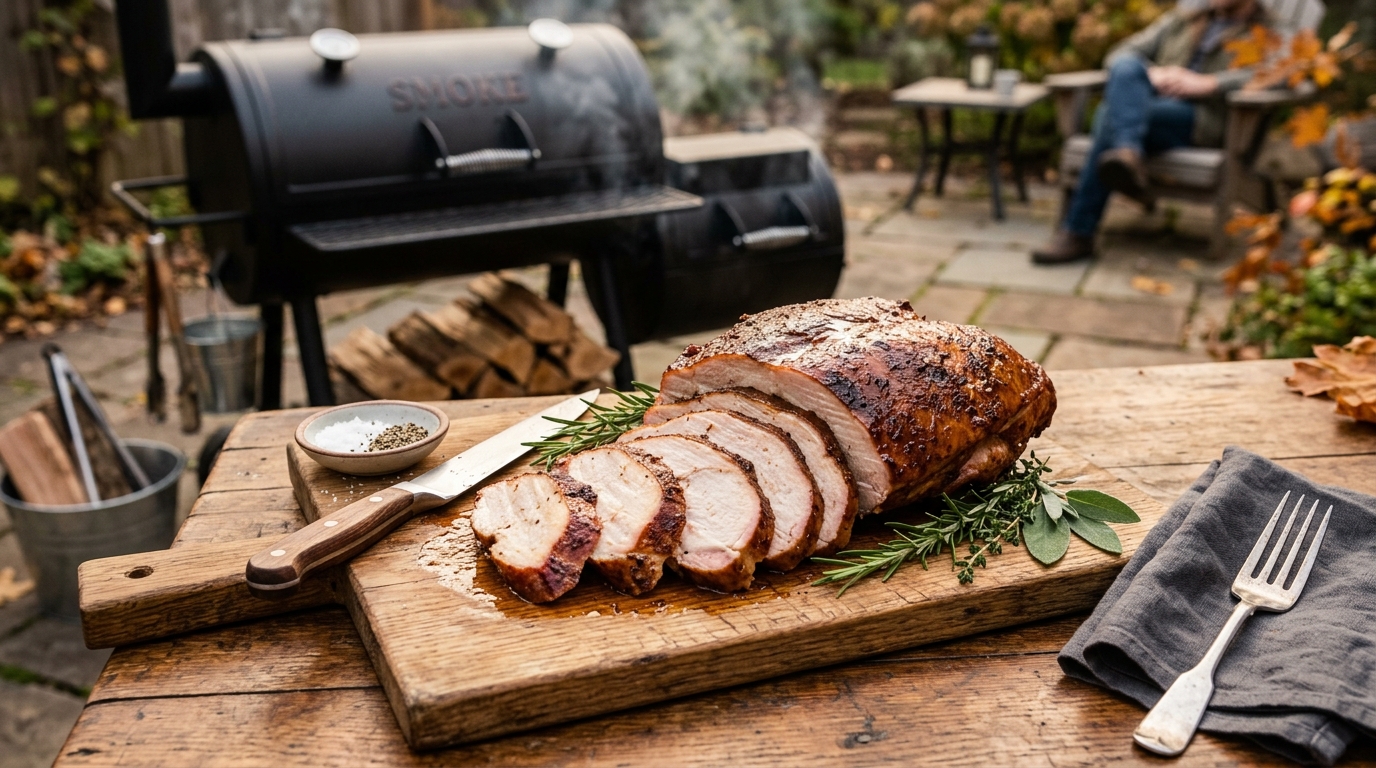
The fastest route to a juicy smoked turkey breast: dry brine for 24 hours with 1 tablespoon of kosher salt per 5 pounds, smoke at 275–300°F, and pull when the thickest part of the breast hits 160°F — usually 25–35 minutes per pound for a bone-in breast. For a 5-pound breast, that means roughly 2.5 hours on the smoker.
Bone-in vs boneless turkey breast: which should you smoke?
The first decision is which cut to put on the smoker. Both work, but they behave differently and are best suited to different situations.
| Product | Best for | Rating | Notes | |
|---|---|---|---|---|
| Bone-in turkey breast | Maximum moisture and flavor with an impressive presentation | ★★★★★ | The bone acts as an insulator, slowing heat penetration and giving the meat more time to cook gently. Produces juicier, more flavorful results. Typically 5–8 lbs, taking 2.5–4 hours at 275–300°F. Best choice for most smoking applications. | — |
| Boneless turkey breast roast | Faster cook time and easier slicing for sandwiches | ★★★★☆ | Often sold in a net bag or butterflied and tied. Cook time is shorter at 1.5–2.5 hours for a 3–5 lb roast. Dries out more easily without the bone and surrounding fat. Benefit: slices cleanly and evenly — excellent for cold leftovers and turkey sandwiches. | — |
For smoking, choose a bone-in, skin-on half breast whenever possible. The bone conducts heat through the center while moderating the rate of cooking at the surface — the same reason bone-in chicken thighs outperform boneless on a grill. If you only have access to a boneless roast, it still smokes well; just monitor temperature closely and pull at the lower end of the doneness window (160°F) to avoid dry meat.
What you need to smoke a turkey breast
Equipment checklist:
- A smoker with stable temperature control (kettle, offset, pellet, kamado, or electric all work)
- A reliable instant-read or leave-in probe thermometer — this is the single most important piece of equipment for turkey breast, which has little margin for overcooking
- A roasting rack set inside a disposable aluminum pan or sheet pan for catching drip
Optional but useful:
- A basting brush for applying butter during the cook
- A small piece of aluminum foil for tenting during the rest period
For a leave-in probe thermometer: wireless leave-in meat thermometer for smokers on Amazon
Heavy-duty disposable aluminum roasting pans: disposable aluminum roasting pans on Amazon
How to brine a turkey breast before smoking
Brining is critical for smoked turkey breast. White meat is extremely lean and loses moisture aggressively during extended dry-heat cooking. A brine counteracts this by saturating the muscle fibers with salt before cooking.
Dry brine (recommended)
Dry brining is simpler, produces crispier skin, and works better in most home refrigerators where finding space for a large bucket is difficult.
Ratio: 1 tablespoon of kosher salt per 5 pounds of turkey breast (about 0.5 teaspoon per pound). Use Diamond Crystal or Morton kosher salt — table salt is too fine and will over-salt the meat.
Method:
- Pat the breast completely dry with paper towels.
- Carefully loosen the skin from the breast meat using your fingers, leaving it attached at the edges.
- Rub a generous portion of the salt mixture directly on the meat under the skin, then apply the remainder over the skin and the exposed bone side.
- Add black pepper, garlic powder, dried thyme, or smoked paprika to the dry brine if desired.
- Place the breast on a wire rack set over a sheet pan and refrigerate uncovered for 24–48 hours.
The uncovered refrigerator rest is important — the surface dries out completely, dramatically improving skin crispiness over a wet-brined breast.
Wet brine (alternative)
Dissolve 1/2 cup of kosher salt per quart of water and submerge the breast for 12–18 hours in the refrigerator. Add brown sugar, peppercorns, bay leaves, garlic, and herbs as desired. After brining, remove the breast, rinse lightly, and pat completely dry before smoking. Surface moisture prevents browning — the breast must be dry when it hits the smoker.
Step-by-step: how to smoke a turkey breast
Step 1: Preheat the smoker to 275–300°F
Do not smoke turkey breast at 225°F. The same rule that applies to whole turkey applies here: at low temperatures, the fat in the skin never renders fully, leaving it pale and unappetizing rather than golden and crisped. Higher heat also minimizes the time the meat spends in the temperature danger zone (40–165°F), a food safety benefit on lean poultry.
Add wood at startup. Two to three fist-sized chunks of apple or cherry wood for a kettle or kamado, one to two small splits for an offset, or a full fruitwood pellet hopper for a pellet smoker.
Step 2: Coat with butter and season
Remove the breast from the refrigerator 30 minutes before placing it on the smoker. Just before the breast goes on, brush the skin with 2–3 tablespoons of softened butter or a neutral oil. The fat promotes browning and helps the skin develop color and crispiness.
For seasoning on top of the dry brine, combine black pepper, onion powder, garlic powder, and smoked paprika in a 1:1:1:1 ratio and dust the exterior lightly. Do not add more salt — the dry brine already seasons the meat from the inside.
Step 3: Place the breast and insert the thermometer probe
Set the breast skin-side up on the grate or on a roasting rack. For a bone-in breast on an offset or kettle, position it away from the direct heat source. Insert the leave-in probe thermometer into the thickest part of the breast meat — aim for dead center, avoiding contact with the bone. The bone conducts heat and returns a falsely high reading.
If using a pan underneath, add a cup of chicken broth to the pan. As the breast drips, the liquid keeps moisture in the environment, and the collected drippings can be used later as a simple finishing sauce.
Step 4: Cook to 160°F
Cook at 275–300°F until the thickest part of the breast reaches 160°F. Carryover cooking during the rest period brings it to 165°F — the USDA minimum safe temperature for poultry. Do not wait for 165°F on the smoker; pulling at 160°F is correct and intentional.
Approximate cook times at 275–300°F:
| Turkey Breast Weight | Estimated Cook Time |
|---|---|
| 3–4 lbs (boneless roast) | 1.5–2 hours |
| 4–5 lbs (bone-in half breast) | 2–2.5 hours |
| 5–7 lbs (bone-in half breast) | 2.5–3.5 hours |
| 7–9 lbs (whole bone-in breast) | 3–4.5 hours |
These are estimates — use temperature, not time, to determine doneness. Smoker temperature variability, starting temperature of the meat, and bone configuration all affect actual cook time.
Optional basting: Baste once every 45–60 minutes with melted butter or the pan drippings below the rack. Keep the smoker closed between basting; every time the lid opens, temperature drops and recovery takes 10 or more minutes.
Step 5: Rest 20–30 minutes before slicing
When the probe hits 160°F, remove the breast from the smoker and tent loosely with aluminum foil. Rest for 20–30 minutes before slicing. The rest is where a significant amount of final moisture retention happens — muscle fibers that contracted during cooking relax and reabsorb the juices that would otherwise pour out onto the cutting board the moment you cut in.
To slice: cut parallel to the bone if bone-in, using a sharp carving knife in smooth strokes rather than sawing motions.
Choosing wood for smoked turkey breast
Turkey breast is mild white meat — it absorbs smoke more readily than fatty beef or pork and can turn bitter if exposed to aggressive wood over a long cook.
Apple wood is the top choice. It produces mild, slightly sweet smoke with excellent color development, giving the skin a beautiful golden-mahogany tone without bitterness. Nearly impossible to over-smoke with, even over a 3-hour cook.
Cherry wood delivers a slightly richer, deeper sweetness than apple and an even more vivid reddish-mahogany color. Combining apple and cherry (half and half) is a classic pairing for poultry.
Pecan works well in moderate quantities — one chunk of pecan alongside one of apple rather than running pecan alone. It adds a nuttier, slightly deeper character.
Maple is a clean, mildly sweet option with natural affinity for poultry, particularly when the brine or glaze includes a maple element.
Avoid: Mesquite (too aggressive; turns bitter on white meat over a long cook). Limit hickory to one small chunk blended with two of apple or cherry — in larger quantities it overpowers turkey.
A fruitwood variety pack for poultry: apple and cherry wood chunks for smoking on Amazon
Optional: glazing a smoked turkey breast
A glaze applied in the final 30–45 minutes adds flavor and creates an attractive lacquered finish on the skin. Time the glaze so natural sugars caramelize rather than burn.
Simple honey-butter glaze: Melt 3 tablespoons of butter with 2 tablespoons of honey, 1 tablespoon of apple cider vinegar, 1/2 teaspoon of garlic powder, and a pinch of black pepper. Brush on lightly when the internal temperature reaches 145–150°F, then reapply once more 15 minutes later. The sugars caramelize between 145°F and 165°F, creating a glossy finish by the time the breast is ready to come off.
Maple-Dijon glaze: Combine equal parts pure maple syrup and Dijon mustard with a tablespoon of apple cider vinegar and a pinch of fresh thyme. Apply starting at 145–150°F internal, with one reapplication 15 minutes later.
Glazing adds only 5–10 minutes of active work and significantly elevates the final presentation.
Common mistakes when smoking turkey breast
Smoking at 225°F. Running the smoker at low-and-slow beef temperatures is the most common mistake with turkey. At 225°F, the fat in turkey skin does not render — it stays pale, soft, and rubbery. Run the smoker at 275–300°F throughout the cook.
Skipping the brine. Turkey breast is lean with almost no internal fat to keep it moist. Without a brine, the meat dries out noticeably before it reaches safe temperature. This is not a step to skip.
Trusting color for doneness. Smoked poultry can look fully done on the outside while still underdone inside — and the smoke ring just under the surface can look like pink, undercooked meat when it is completely safe. Always verify with a probe thermometer.
Cutting immediately after pulling. Slicing a rested breast versus an unrested one is a noticeable difference. The 20–30 minute rest is not optional; skipping it wastes most of the moisture you preserved through brining and careful temperature management.
Overcooking past 165°F. Unlike beef or pork where a few extra degrees means little, turkey breast at 175°F is noticeably dry and chalky. Pull at 160°F and trust the carryover.
FAQ
Frequently asked questions
How long does it take to smoke a turkey breast?
What internal temperature should smoked turkey breast reach?
Do I need to brine a turkey breast before smoking?
Can I smoke a frozen turkey breast?
What is the best wood for smoking turkey breast?
Should I smoke a turkey breast at 225 or 275?
How do I keep a smoked turkey breast moist?
Bottom line
Smoking a turkey breast rewards simple technique done well: dry brine for 24 hours, preheat the smoker to 275–300°F, use apple or cherry wood, and pull the breast at precisely 160°F. Rest for at least 20 minutes before slicing and consider a honey-butter or maple-Dijon glaze in the final 30 minutes for a polished finish. Whether cooking for a weeknight dinner or a smaller holiday gathering, a smoked turkey breast delivers whole-bird flavor in half the time with a fraction of the complexity.
For related reading: how to smoke a turkey: whole bird guide, how to use a smoker: complete beginner guide, best wireless meat thermometers for BBQ, or brisket smoking guide: times, temps, and technique.