guides
How to Grill Vegetables: Step-by-Step Guide
Master grilling every vegetable — from zucchini to corn — with the right temps, prep steps, and timing guide for perfect charred results every time.
 Cole Whitaker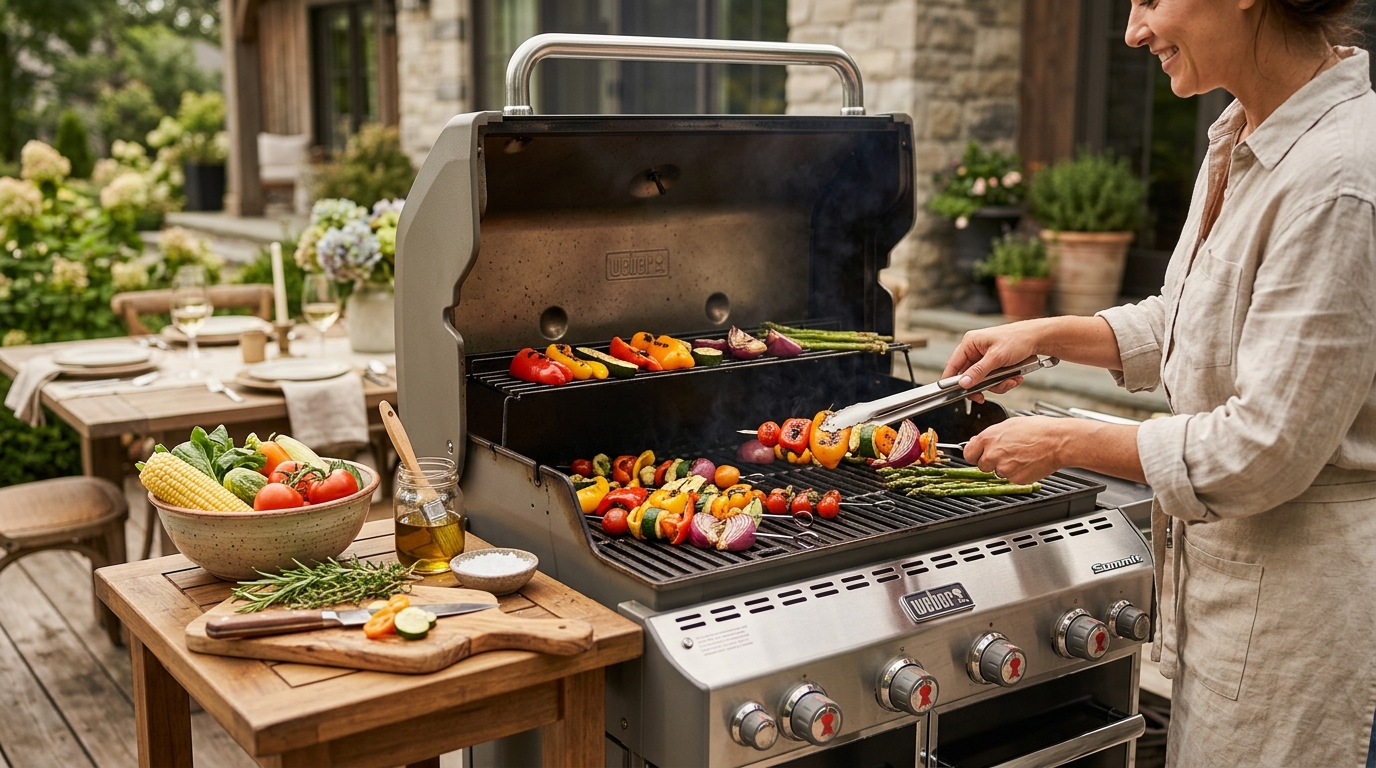
The fastest way to grill vegetables: cut them into 1/2- to 3/4-inch slices, toss with oil and salt, and grill over medium-high heat (400–450°F) for 3–5 minutes per side depending on the vegetable. The details — uniform thickness, pre-heated oiled grates, and patience before the first flip — are what separate charred-outside-raw-inside results from properly cooked grilled vegetables with real caramelization.
Which vegetables are best for grilling?
Not all vegetables respond equally to grill heat. High water content and soft texture mean some vegetables overcook to mush before getting any char; dense, starchy types take longer than most grillers expect. The table below ranks common vegetables by how forgiving they are at the grill.
| Product | Best for | Rating | Notes | |
|---|---|---|---|---|
| Zucchini and summer squash | Beginners — fast, forgiving, excellent char | ★★★★★ | High surface-to-volume ratio develops char quickly. Cut lengthwise into 1/2-inch planks for maximum contact. Ready in 3–4 minutes per side at 400°F. | — |
| Bell peppers | Sweet, blistered skin — crowd favorite | ★★★★★ | Cut into halves or thick strips. Skin blisters and chars for easy peeling after grilling. Grill flesh-side down first, 4–5 minutes per side. | — |
| Corn on the cob | Smoky, sweet — easiest presentation | ★★★★★ | Grill husked over direct coals for char, or in husks for a steamed result. Direct heat, 12–15 minutes total, rotating every 3–4 minutes. | — |
| Asparagus | Quick cook, elegant presentation | ★★★★★ | Use thick spears only — pencil-thin ones burn before softening. Toss with oil and grill 2–3 minutes per side. A grill basket prevents rolling and falling through. | — |
| Portobello mushrooms | Meaty texture, holds up to high heat | ★★★★★ | Grill gill-side up first for 4–5 minutes, then flip. Remove when the cap feels tender under light pressure. Season generously — mushrooms absorb oil and salt fast. | — |
| Eggplant | Creamy interior, smoky flavor | ★★★★☆ | Slice into 1/2-inch rounds, salt for 20 minutes to draw moisture, pat dry, then grill 4–5 minutes per side. Under-oiling is the most common mistake — eggplant absorbs oil aggressively. | — |
What to avoid on direct grates: Cherry tomatoes, thin leafy greens, and any cut piece under 1 inch will fall through the grates or turn to mush in seconds. Use a grill basket for these. Snow peas and snap peas grill very fast (90 seconds max) and go limp almost instantly — if you want to include them, add them last and watch carefully.
What equipment do you need to grill vegetables?
The list is short. The items that make the biggest practical difference are a clean, well-oiled grate and a grill basket for smaller pieces.
The non-negotiables:
- A grill capable of 400–450°F — gas or charcoal both work equally well
- Long-handled tongs — at least 12 inches; longer is better over live charcoal
- A bowl and brush or spray bottle — for oiling vegetables evenly before grilling
Gear that genuinely helps:
- Grill basket on Amazon — non-negotiable for asparagus, cherry tomatoes, and any cut piece under 1 inch
- Long grilling tongs on Amazon — extra length keeps your hands away from direct heat during flips
- Instant-read thermometer on Amazon — useful for thick pieces like corn and large peppers where doneness is hard to judge visually
- Grill brush on Amazon — clean grates before every cook; debris is the primary cause of vegetables sticking
How to prep vegetables before grilling
Good prep takes 10 minutes and determines the final result more than any single step on the grill.
Step 1: Wash and thoroughly dry. Surface moisture creates steam between the vegetable and the hot grate. Steam slows caramelization and promotes sticking — the opposite of what you want. Pat everything completely dry with paper towels on both sides before adding any oil.
Step 2: Cut for even cooking. Every piece should be roughly the same thickness so they finish at the same time. For zucchini and eggplant, cut lengthwise into 1/2-inch planks for maximum grate contact. For bell peppers, remove seeds and cut into halves or wide thirds. For mushrooms, leave portobello caps whole and halve any that are exceptionally large. For corn, leave on the cob. For onions, cut crosswise into 1/2-inch rounds. Uniform cuts are the single most impactful change a beginner can make.
Step 3: Toss with oil and season. Add the vegetables to a large bowl, drizzle with canola or avocado oil, and toss until every surface glistens — roughly 1 tablespoon per pound. Season generously with kosher salt and black pepper. If you are using a marinade, pat off any excess liquid before grilling; marinade runoff drips into burners and flame zones, causing flare-ups that char the outside before the interior is done.
Simple seasoning combinations that work well:
- Kosher salt, black pepper, garlic powder — works on everything, lets the char flavor come through
- Balsamic glaze and fresh thyme — add the glaze in the last 2 minutes only; earlier, it burns
- Smoked paprika, cumin, and lime zest — excellent on bell peppers and zucchini
- Soy sauce and sesame oil — apply after grilling; sugars in both burn aggressively at grill temperatures
Step 4: Par-cook dense vegetables if needed. Potatoes, beets, thick carrot halves, and similar dense, starchy vegetables need 20 or more minutes to cook through on a grill. Par-cook them in boiling water for 5–7 minutes — until slightly tender but not fully cooked through — then drain and dry thoroughly before adding oil. This is the only reliable way to get grill marks and a fully cooked interior at the same time.
How to set up your grill for vegetables
Gas grill setup: Preheat all burners on high for 10–15 minutes. Aim for 400–450°F at the grate level. Then turn one burner down to medium-low to create an indirect zone where you can move pieces that are charring too fast. Scrub the grates clean with a grill brush to remove all debris from previous cooks. Wipe the grates with a folded paper towel dipped in canola oil, held with long tongs — two passes is better than one.
Charcoal grill setup: Light a full chimney of charcoal and wait until all coals are covered in grey ash, about 20 minutes. Pour the coals into a two-zone arrangement: a full layer on one side of the grill for direct heat, the other side empty for indirect. The grate should be at 400–450°F before any vegetables go on. Clean and oil the grates as above. Two-zone setup is especially useful for large pieces like whole corn and thick eggplant slabs that need indirect finishing after direct searing.
How to grill vegetables: the complete process
Step 1: Verify the grill is at 400–450°F. An under-heated grate means vegetables sit too long before any caramelization starts, causing sticking and a soggy exterior. If you do not have a grill thermometer, test by holding your open hand five inches above the grate — if you can hold it there for only 2–3 seconds before the heat forces you to pull back, the grill is in the right range.
Step 2: Oil the grates one final time. Even after the setup pass, one more light wipe with an oiled paper towel right before the vegetables go on is worth doing. Oil burns off the grates during the preheat; a fresh coat right before loading reduces sticking on the first contact.
Step 3: Place vegetables on the grate and leave them alone. Lay pieces across the grates at a 45-degree angle to the bars for better marks and less chance of falling through. For the first 3–4 minutes, do not lift, nudge, or reposition anything. Moving pieces before a crust forms tears them and prevents proper grill marks from developing. A properly seared vegetable releases naturally when the bottom is ready — if it resists, wait 30–60 more seconds and try again.
Step 4: Flip once and cook the second side. Use tongs to flip each piece in one smooth motion. The second side takes 2–4 minutes for most vegetables — slightly less time than the first side because the piece is already warm throughout. Look for good color on the second side and check tenderness by pressing with tongs: the piece should have real give but not feel completely soft.
Step 5: Move to indirect heat if needed. If pieces have the color you want but still feel firm at the center — common with thick eggplant, large pepper halves, or corn — move them to the indirect zone, close the lid, and let them finish 3–5 minutes over indirect heat. This cooks the interior through without adding more char to the outside.
Step 6: Remove and finish immediately. Transfer to a platter and season with a final pinch of flaky sea salt and any finishing glaze, oil, or fresh herbs while everything is still hot. Acids like fresh lemon juice or a splash of red wine vinegar amplify the smoky flavor — add them at the end, not before grilling.
Grilling times by vegetable
| Vegetable | Prep | Direct heat per side | Done when |
|---|---|---|---|
| Zucchini (1/2-inch plank) | Oil, salt | 3–4 min | Tender with clear grill marks |
| Bell pepper (halved) | Oil, salt | 4–5 min | Blistered skin, soft flesh |
| Corn (husked) | Oil, salt | 3–4 min per rotation | Kernels golden and spotted |
| Asparagus (thick spear) | Oil, salt, basket | 2–3 min | Tender-crisp, slight char |
| Portobello (whole cap) | Oil, salt | 4–5 min per side | Cap yields to light pressure |
| Eggplant (1/2-inch round) | Salt 20 min, oil | 4–5 min | Golden-brown grill marks, soft center |
| Onion (1/2-inch round) | Oil, salt | 4–5 min | Softened and beginning to caramelize |
| Cherry tomatoes (basket) | Oil, salt | 2–3 min toss | Blistered and starting to burst |
| Thick potato slices | Par-cook 6 min first | 3–4 min | Crisp exterior, fully cooked through |
Common grilled vegetable mistakes
Cutting pieces too thin. Thin slices — under 1/4 inch — burn on the exterior before there is time to develop interior tenderness or proper char. Stay at 1/2 inch minimum for any vegetable except asparagus.
Not oiling enough. Dry vegetables stick to grill grates aggressively. Toss until every surface glistens; press a piece between your fingers and it should feel slick. Wiping oil onto vegetable surfaces rather than oiling the grate directly gives more even coverage.
Moving pieces too early. The number-one reason for broken vegetables and torn surfaces is impatience. Set a timer for 3 minutes after placing vegetables, then test one piece gently. If it sticks, wait another minute.
Crowding the grate. Leave at least 1/2 inch between pieces so heat can circulate properly. Packed grates steam instead of sear — the water that cooks off the vegetables has nowhere to escape.
Using marinades with high sugar content on direct heat. Sugar burns between 320–350°F. At a 400°F grill temperature, any glaze or marinade with honey, brown sugar, or teriyaki will carbonize and turn bitter within minutes on direct heat. Add sweet glazes only in the final 1–2 minutes or after pulling from the grill.
FAQ
Frequently asked questions
What temperature should you grill vegetables at?
How do you keep vegetables from sticking to the grill?
Can you grill vegetables on a gas grill?
Should you marinate vegetables before grilling?
Do vegetables need to be grilled in a basket?
How do you grill corn on the cob?
Bottom line
Grilling vegetables well comes down to three things: uniform cuts at 1/2 to 3/4 inch, enough oil to coat every surface, and patience for the first 3–4 minutes without moving anything. Medium-high heat at 400 to 450°F builds the caramelization and char that makes grilled vegetables taste fundamentally different from roasted or sautéed. Dense vegetables need par-cooking first; a grill basket eliminates the problem of small pieces falling through. Zucchini, bell peppers, and portobello mushrooms are the most forgiving starting points for anyone new to grilling vegetables.
For related reading: how to grill a perfect steak, how to grill salmon, best grill thermometers, and direct vs indirect grilling.