guides
How to Grill Shrimp Skewers
Step-by-step guide to grilling perfect shrimp skewers — shrimp size, marinade, skewering technique, direct heat timing, and mistakes to avoid.
 Cole Whitaker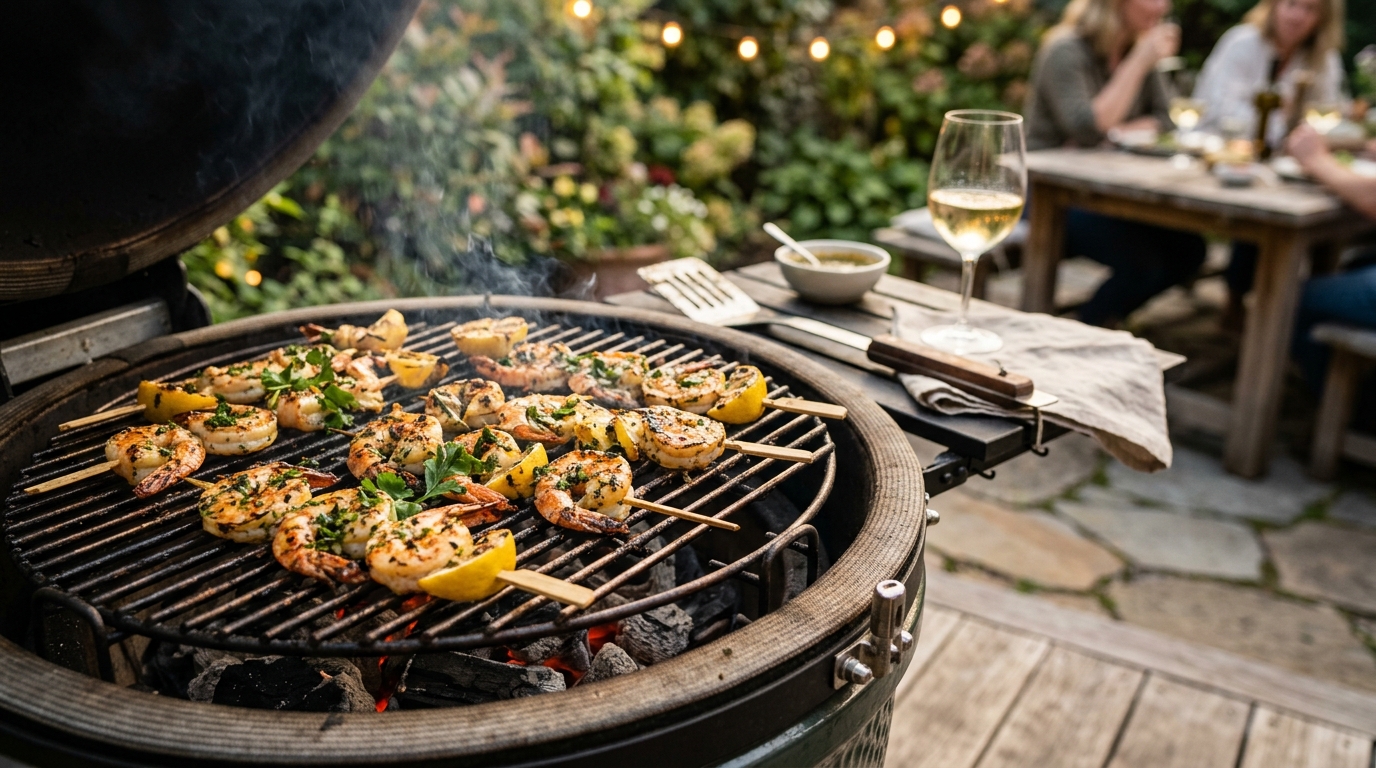
Pat shrimp dry, thread onto flat metal skewers or pre-soaked bamboo, brush with oil, and grill over direct high heat (450–500°F) for 2 minutes per side. Shrimp are done when they turn opaque pink and curl into a loose C-shape — a tight curl means overcooked. Total cook time is 4 minutes for 16–20 count shrimp.
Which shrimp size is best for grill skewers?
Shrimp size is the most important decision you make before lighting the grill. The count-per-pound number tells you how many shrimp make up one pound — lower numbers mean larger shrimp.
| Product | Best for | Rating | Notes | |
|---|---|---|---|---|
| 16-20 count (large) | Best all-around skewer shrimp | ★★★★★ | The sweet spot for grilling. Large enough to develop char on the outside before the interior overcooks. Easy to thread and they present well on the plate. Available fresh and frozen at most grocery stores. | — |
| 21-25 count (medium-large) | More pieces per skewer, still reliable | ★★★★★ | Slightly smaller than 16-20 but still large enough to handle direct high heat. Reduce cook time by about 30 seconds per side. A good choice when feeding a large group and you want more pieces per person. | — |
| 8-12 count (jumbo/colossal) | Impressive presentation, forgiving timing | ★★★★☆ | Large enough that you have 3 to 4 minutes per side before overcooking. Impressive for entertaining. More expensive and require slightly longer marinating time for the flavor to penetrate. | — |
| 26-30 count (medium) | Budget option, requires close attention | ★★★☆☆ | On the small side for grilling. Overcooks very quickly at high heat — watch closely and pull at 90 seconds per side. Better suited for pasta or stir-fry than a skewer presentation over open flame. | — |
Fresh versus frozen: Frozen shrimp is often the smarter buy. Most shrimp sold as “fresh” at the fish counter was previously frozen and thawed for display. Buying frozen and thawing yourself gives you more control over quality and timing. Look for IQF (individually quick frozen) shrimp in a resealable bag with no added water or sodium solutions. Thaw overnight in the refrigerator or in a colander under cold running water for 15 minutes.
Shell-on or peeled: Peel and devein before grilling. Shell-on shrimp adds slight protection from direct heat, but the shell makes eating at the grill awkward. Leave the tail on — it serves as a natural handle and shields the tail end from drying out over high heat.
What you need to grill shrimp skewers
The right skewer is the most important equipment choice. Standard round bamboo skewers let shrimp spin freely when you flip them, which means only two narrow contact points cook rather than the whole surface. Use flat-blade metal skewers, or thread two parallel bamboo skewers per row to lock each piece in place.
Flat metal skewers on Amazon — 12-inch stainless flat-blade skewers prevent shrimp from rotating when you flip. Reusable and dishwasher safe. The flat profile is the key feature to look for when buying.
Bamboo skewers on Amazon — if using bamboo, buy 12-inch sticks and soak them in cold water for at least 30 minutes before threading shrimp. A 2-hour soak reduces burning risk further. Use two parallel bamboo skewers per kebab row to prevent spinning.
Additional equipment:
- A stiff grill brush for cleaning the grate — shrimp sticks to residue and tears when you try to flip
- Long-handled tongs (12 to 16 inches) to flip the skewers without reaching directly over the flame
- An instant-read thermometer for confirmed food safety — shrimp are safe at 145°F internal temperature
- A basting brush for applying oil and glazes during the cook
Long-handled grill tongs on Amazon — 16-inch spring-loaded tongs give enough reach to flip shrimp skewers over a hot direct fire without putting your hand above the flame zone.
How to prepare shrimp for the grill
Good prep takes about 20 minutes and largely determines the final result.
1. Thaw and peel the shrimp. Thaw frozen shrimp in the refrigerator overnight or in a colander under cold running water for 10–15 minutes. Peel off the shell while leaving the tail attached. Pull the tail pincer back to expose and remove it, or leave the full tail on as a handle — both approaches work.
2. Devein. Use a paring knife or a dedicated deveiner to make a shallow cut down the back of each shrimp and remove the dark digestive tract. It is not harmful to eat, but removing it improves the appearance and texture. On 16-20 count shrimp the vein is usually visible and easy to extract cleanly.
3. Pat completely dry. This is the most skipped and most consequential step. Wet shrimp steams on a hot grill instead of searing. Use paper towels and press firmly — shrimp hold a surprising amount of surface moisture even after peeling. Dry shrimp sears; wet shrimp turns grey and soft.
4. Marinate for 15–30 minutes. Mix your marinade and toss the shrimp to coat evenly. Cover and refrigerate. Do not exceed 30 minutes if your marinade contains acid (lemon juice, lime juice, vinegar, or white wine). Acid begins denaturing the protein and changes the texture before the shrimp ever reaches the grill.
5. Thread onto skewers. Pierce each shrimp through two points — once near the tail and once near the thick body end — so the shrimp lies flat on the skewer. Shrimp threaded through only one point curl awkwardly and cook unevenly. Aim for 5 to 6 large shrimp per skewer with the pieces touching but not overlapping.
How to grill shrimp skewers: step-by-step
1. Clean and oil the grate. Scrub the grate with a grill brush to remove residue from previous cooks. Fold a paper towel into a thick pad, dip it in neutral high-smoke-point oil, and use tongs to wipe down the grate. Do this right before placing the shrimp — a clean, lightly oiled surface prevents sticking and lets the shrimp release cleanly when you flip.
2. Preheat to high direct heat. Target 450–500°F at the grate level. For gas grills, set all burners to high and close the lid for 12–15 minutes. For charcoal, light a full chimney of briquettes or lump charcoal and spread the coals in a single-zone setup when covered in grey ash. Shrimp cook so fast that you want maximum heat from the start — no two-zone fire is needed for a standard shrimp cook.
3. Brush skewers with oil before placing. Remove the shrimp from the marinade and let excess drip off. Brush each skewer lightly with avocado or canola oil just before laying them on the grate. Excess marinade liquid causes flare-ups when it drips onto the coals or burners.
4. Lay skewers perpendicular to the grate bars. Placing skewers crosswise to the grill bars creates more contact points for even char marks. Close the lid and set a timer for 2 minutes.
5. Flip once at 2 minutes. Open the lid and flip each skewer using long tongs. Properly seared shrimp will release cleanly from the grate. If a skewer resists, wait 30 additional seconds — shrimp release naturally once a sear has formed. Do not force the flip or you will tear the shrimp. After flipping, close the lid and cook for another 90 seconds to 2 minutes.
6. Pull at the right moment. Watch for the color change from grey-translucent to opaque pink-white. Pull the skewers the instant they are fully opaque and curled into a loose C-shape. A tight O-shape means the protein has contracted fully and the shrimp are overcooked. The window between perfectly done and overdone is narrow — roughly 30 seconds at 500°F.
7. Rest briefly and serve. Let the skewers rest on a cutting board or warm platter for 1 to 2 minutes before serving. Squeeze fresh citrus over the top or apply a finishing glaze immediately while the surface is still hot.
Marinade ideas for grilled shrimp
Each of these takes under 5 minutes to mix. Toss the shrimp in the marinade, cover, and refrigerate for 15–30 minutes.
Classic garlic-lemon: 3 tablespoons olive oil, 3 garlic cloves (minced), juice of 1 lemon, 1 teaspoon kosher salt, 1/2 teaspoon cracked black pepper, 1/4 teaspoon red pepper flakes. Clean, bright, and pairs with nearly any side dish.
Cajun butter: 2 tablespoons melted butter, 1 tablespoon Cajun seasoning, 1 teaspoon smoked paprika, pinch of cayenne. Bold and spicy with a deep smoky base note. Finish with a squeeze of lime right off the grill.
Honey-soy Asian glaze: 2 tablespoons soy sauce, 1 tablespoon honey, 1 tablespoon sesame oil, 1 teaspoon fresh grated ginger, 2 garlic cloves (minced). The honey caramelizes along the edges during the last 60 seconds on the grill — watch closely to prevent burning.
Herb and citrus: 3 tablespoons olive oil, zest and juice of 1 lime, 2 tablespoons chopped fresh cilantro, 1 tablespoon chopped flat-leaf parsley, 1/2 teaspoon cumin, 1/2 teaspoon kosher salt. Light and herbal — excellent served over rice or folded into a taco.
Shrimp seasoning blend on Amazon — for a fast weeknight option, a pre-mixed shrimp seasoning blend handles the salt, heat, and aromatic balance in one step. Old Bay is a widely available starting point; blends designed specifically for grilling often add paprika, garlic, and citrus peel for a more complete result.
What mistakes ruin grilled shrimp?
Not drying the shrimp. Moisture on the surface prevents browning. The shrimp steams instead of searing, turning grey rather than developing the caramelized char that makes grilled shrimp appealing. Pat shrimp thoroughly dry with paper towels even after marinating.
Marinating too long in acid. After 45 minutes in lemon or lime juice, the surface protein begins denaturing and turns opaque before the shrimp reaches the grill. The texture becomes mushy at the edges. Limit acid-based marinades to 30 minutes maximum. Oil-only marinades can safely hold for up to 4 hours refrigerated.
Using shrimp that are too small. Anything smaller than 21-25 count overcooks before developing any meaningful char on a hot grill. By the time the outside shows color, the interior has gone rubbery and tight. Spend the extra dollar per pound to step up to a larger size.
Grilling at medium or low heat. Shrimp need high heat to brown quickly before the interior dries out. At medium heat, the cook time extends and the shrimp steams in its own moisture rather than searing. If the shrimp are not sizzling loudly the moment they touch the grate, the grill needs more time to preheat.
Overcrowding the skewer. Shrimp packed tightly so they overlap trap steam between each piece and prevent heat from circulating evenly. Leave a small gap between each shrimp on the skewer for even cooking and more contact with the grate.
Using round bamboo skewers without a fix. Shrimp spin freely on a single round skewer, so only two points ever touch the grill. Either use flat-blade metal skewers or thread each row of shrimp onto two parallel bamboo skewers to lock them in position.
FAQ
Frequently asked questions
How long do you grill shrimp skewers?
Do you need to soak skewers before grilling shrimp?
What temperature should the grill be for shrimp skewers?
Can you marinate shrimp overnight for grilling?
How do you keep shrimp from sticking to the grill?
Should shrimp be peeled before grilling on skewers?
Bottom line
Grilling shrimp skewers comes down to three things: large shrimp, dry surfaces, and high heat. Use 16-20 count shrimp, pat them completely dry after peeling, keep acid marinades to 30 minutes, and cook over direct 450–500°F heat for 2 minutes per side. Pull the moment the shrimp turn opaque and curl into a loose C. A tight curl or grey color means they went too long — overcooked shrimp cannot be rescued. Get the size, the dryness, and the temperature right, and shrimp skewers become one of the fastest and most impressive things you can put on the grill.
For more grilling guides: how to grill a perfect steak, how to grill salmon without it falling apart, how to grill vegetables properly, and best instant-read thermometers for the grill.