roundups
Best Wood Chunks for Smoking 2026
Top wood chunks for charcoal smokers reviewed. Hickory, apple, cherry, oak, and mesquite compared for brisket, ribs, pork, and chicken.
 Cole Whitaker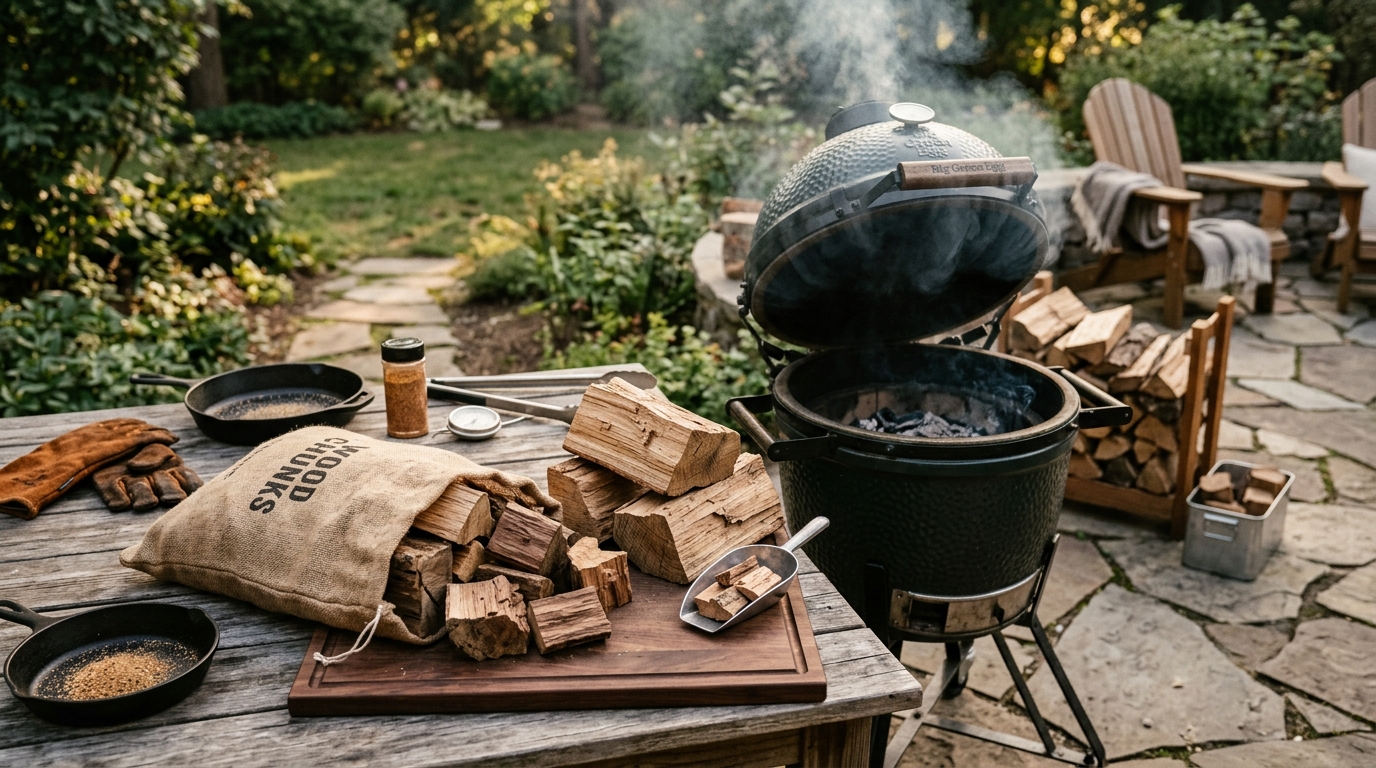
Weber Hickory Chunks are the best all-around wood chunks for smoking — available everywhere, consistent quality, and versatile across beef, pork, and poultry. For sweeter profiles on pork and chicken, Weber Apple or Western Premium Cherry chunks are the runner-up. Always buy chunks over chips for any charcoal cook lasting over 45 minutes.
Why chunks instead of chips?
Wood chips burn in minutes — they are designed for short-smoke applications on gas grills and electric smokers with chip trays. Wood chunks burn slowly and produce sustained smoke for 45 minutes to two hours per piece, which is what charcoal offset smokers, kettle smokers, and kamado cookers need for briskets, pork shoulders, and ribs.
Use chips when: you have a gas grill, an electric smoker with a chip tray, or a cook lasting under 30 minutes.
Use chunks when: your setup is charcoal-based (offset, kettle, kamado), your cook lasts over 45 minutes, or you are running a pellet smoker with an aftermarket smoke tube or mailbox modification.
Chunk size matters. Fist-sized chunks (roughly 2 to 4 inches) are the standard for kettle and charcoal smokers. Larger split chunks the size of a firewood piece are for true offset stick-burners and should be used as the main fuel alongside regular splits, not as an addition on top of charcoal.
Does soaking chunks in water actually help?
No. Soaking is one of the most persistent myths in backyard BBQ. When you drop a wet chunk onto hot coals, the water must evaporate before the wood reaches smoking temperature — which means you get a delay in smoke onset and a brief steaming effect, not better smoke quality. Dry chunks ignite faster, produce cleaner thin blue smoke sooner, and burn more predictably. Skip the bucket. Use chunks dry, every time.
Quick comparison
| Product | Best for | Rating | Notes | |
|---|---|---|---|---|
| Weber Hickory Chunks (4 lb) | best overall; bold versatile smoke for beef and pork | ★★★★★ | Widely available. Consistent fist-sized chunks. Clean burn. | Check price |
| Weber Apple Wood Chunks (4 lb) | best for pork ribs, chicken, and turkey | ★★★★★ | Mild sweet smoke. Pairs with any pork or poultry cut. | Check price |
| B&B Charcoal Oak Chunks (8 lb) | best for Texas-style brisket and beef ribs | ★★★★★ | Post oak flavor. Milder than hickory. Texas classic. | Check price |
| Western Premium Cherry Chunks | best bark color; mild-sweet smoke on pork and beef | ★★★★★ | Cherry adds deep mahogany color to the bark. | Check price |
| Camerons Mesquite Chunks (10 lb) | best for beef steaks and short hot cooks | ★★★★★ | Intense earthy smoke. Use sparingly on long cooks. | Check price |
| Orchard Valley Pecan Chunks (20 lb) | best bulk value; mild nutty smoke on all proteins | ★★★★★ | Pecan is mild and nutty. Great per-pound price at 20 lb. | Check price |
The picks
Best overall: Weber Hickory Chunks
Best for anyone who wants a dependable all-purpose smoking wood for beef, pork, and poultry
Weber Hickory Wood Smoking Chunks (4 lb)
Weber chunks are the default recommendation for a reason: consistently sized (fist to palm-sized), single-species hickory, and available at every Home Depot, Walmart, and Amazon. Hickory produces the classic American BBQ smoke flavor — bold enough to stand up to brisket and pork shoulder, versatile enough for chicken thighs and ribs. One 4-lb bag provides 8-12 chunks, enough for 2-3 full brisket cooks. Weber does not inject oils or add filler species — what is on the label is what is in the bag.
★★★★★ 4.7 · 6,800 reviews
Check current price on Amazon→Pros
- Available at every major home-improvement, grocery, and outdoor retailer
- Consistent fist-sized chunks — no dust, no oversized splits, no powder
- Single-species hickory with no fillers or added oils
- Works on beef brisket, pork shoulder, ribs, chicken, and sausage
- Easy to find the same day you decide to smoke — no waiting on shipping
Cons
- 4-lb bags run out quickly for frequent pitmasters — buying multiple bags adds up
- Bold hickory smoke can overpower delicate proteins like fish or mild white fish
- Some bags have inconsistent chunk sizing compared to specialty brands
Best for pork and poultry: Weber Apple Wood Chunks
Best for pork ribs, pork shoulder, chicken, turkey, and light seafood
Weber Apple Wood Smoking Chunks (4 lb)
Apple produces a mild, slightly sweet smoke that flatters pork and poultry without overpowering them. Pitmasters who smoke chicken thighs, spare ribs, or whole turkeys with apple consistently get better results than the same cooks done on hickory alone. Weber Apple is the easiest to find and burns predictably. Many pitmasters run a 2:1 ratio of hickory to apple on pork shoulder — bold smoke backbone from hickory, sweetness and color from apple. The combination is widely considered the best all-purpose pork smoke profile.
★★★★★ 4.7 · 5,200 reviews
Check current price on Amazon→Pros
- Mild sweet smoke that does not overpower chicken, turkey, or pork
- Adds mahogany color to bark on ribs and pork shoulder
- Same consistent sizing and quality as other Weber chunk products
- Mixes well 50/50 with hickory or cherry for complex layered smoke
Cons
- Too mild for beef brisket or beef ribs on its own — supplement with hickory or oak
- Shorter burn time per chunk compared to denser woods like hickory or oak
Best for Texas-style brisket: B&B Oak Wood Chunks
Best for brisket and beef short ribs cooked Central Texas style
B&B Charcoal Oak Wood Chunks (8 lb)
Central Texas barbecue is defined by post oak smoke. B&B Charcoal (a Texas institution since 1956) makes the most accessible post oak and oak wood chunks for home pitmasters. Oak smoke is milder than hickory but cleaner — it lets the beef fat and salt-and-pepper seasoning carry the flavor rather than masking it with heavy smoke. The 8-lb bag is the right size for frequent brisket cooks. B&B also offers mesquite and hickory chunks in the same format for variety. If you only smoke beef, this is the chunk to buy.
★★★★★ 4.8 · 2,100 reviews
Check current price on Amazon→Pros
- Post oak produces the authentic Central Texas brisket flavor — mild, clean, beef-forward
- 8-lb bag provides real value for pitmasters who smoke regularly
- B&B is a respected Texas brand with decades of consistent quality
- Oak burns longer and cleaner than fruit woods or hickory per chunk
Cons
- Less widely available than Weber chunks — primarily online or Texas-region retail
- Mild oak smoke can seem underwhelming to pitmasters used to hickory-heavy profiles
Best bark color and mild-sweet smoke: Western Premium Cherry Chunks
Best for deep mahogany bark color on pork ribs, pork belly, and beef with hickory
Western Premium BBQ Cherry Wood Chunks
Cherry wood produces the richest mahogany bark color of any smoking wood — pitmasters who want a dark, visually impressive bark on ribs or pork belly often run cherry or cherry blends. The smoke flavor is mild and slightly sweet with a faint tartness. On beef, cherry adds color and subtle fruitiness that complements beef fat without overpowering it. The classic pitmaster combination is 2 parts hickory with 1 part cherry for ribs: hickory supplies the smoke punch and cherry supplies the color and sweetness. Western Premium is widely available and consistently sized.
★★★★★ 4.6 · 3,400 reviews
Check current price on Amazon→Pros
- Deepest bark color of any smoking wood — ideal for competition-quality appearance
- Mild enough for delicate proteins that hickory or mesquite would overwhelm
- Works on beef, pork, and poultry — genuinely versatile across protein categories
- Cherry-hickory blending is a staple combination in competition BBQ circles
Cons
- Shorter burn time per chunk — cherry is a lighter density wood than hickory or oak
- Mild flavor gets lost on thick cuts like full packer brisket without supplementing
Best for bold beef and steaks: Camerons Mesquite Chunks
Best for beef steaks, fajitas, lamb, and short hot-and-fast cooks on beef
Camerons Products Mesquite Wood Smoking Chunks (10 lb)
Mesquite is the most intense, fastest-burning smoking wood available. It produces heavy, earthy smoke with a pronounced boldness that defines classic Texas-style fajitas and grilled beef. On long cooks over 10-12 hours, mesquite can turn bitter and acrid — limit it to cooks under 4 hours or use it as a minor addition (1 chunk) alongside milder woods on longer cooks. Camerons 10-lb bags at a competitive price point make it a solid bulk buy for beef-focused households. The bag size means you can afford to experiment without running out.
★★★★★ 4.5 · 1,900 reviews
Check current price on Amazon→Pros
- Intense earthy smoke flavor that defines classic Texas beef and fajitas
- 10-lb bag provides solid value for mesquite users
- Fast smoke onset — good for quick-cook beef steaks and grilling applications
Cons
- Becomes acrid and bitter on cooks over 4-6 hours — not suitable for full brisket
- Too intense for pork, chicken, or fish — a single-protein wood
- Requires more careful chunk management to avoid heavy, unpleasant smoke
Best bulk value: Orchard Valley Pecan Chunks
Best for high-volume pitmasters who want a mild versatile wood at the best per-pound cost
Orchard Valley Supply Pecan Wood Chunks (20 lb)
Pecan is the underrated middle ground of smoking woods. Milder than hickory, slightly nuttier than apple or cherry, and genuinely compatible with every protein category. 20-lb bags from Orchard Valley Supply — a well-regarded bulk wood supplier — offer the best cost-per-pound ratio in the chunk category. Pecan is the default wood in Oklahoma and Kansas City BBQ traditions. It blends well with hickory for brisket (softens the boldness) or with cherry for ribs (adds dimension without sweetness overload). For pitmasters who smoke every weekend, this is the economical foundation to build around.
★★★★★ 4.6 · 2,800 reviews
Check current price on Amazon→Pros
- Mild, nutty smoke that works across beef, pork, and poultry without overpowering
- 20-lb bulk sizing drops the per-pound cost significantly versus retail bags
- Long burn time per chunk — pecan is a dense hardwood that smolders slowly
- Pairs well with hickory or cherry for custom blend profiles
Cons
- Less available in physical retail than Weber or Western Premium
- Mild flavor provides less impact on thick cuts without supplementing with hickory
Wood type pairing guide
| Wood | Flavor Profile | Best For | Avoid On |
|---|---|---|---|
| Hickory | Bold, bacony, classic | Beef brisket, pork ribs, sausage | Delicate fish, mild shellfish |
| Apple | Mild, sweet, fruity | Chicken, turkey, pork ribs, pork belly | Thick beef cuts alone |
| Cherry | Mild-sweet, tart, color | Pork ribs, pork belly, beef with hickory | Delicate fish |
| Oak | Clean, mild, earthy | Texas brisket, beef short rib, lamb | None — very versatile |
| Mesquite | Intense, earthy, bold | Beef steaks, fajitas, short cooks | Pork shoulder, long cooks |
| Pecan | Mild, nutty, complex | All proteins; best as a blending base | None |
How many chunks to use — and when to stop adding them
The most common beginner mistake is adding chunks too frequently. Heavier smoke does not mean better smoke. After a certain point — roughly when the meat surface reaches 150-160 degrees F — the meat stops accepting smoke flavor because the outer bark has set and moisture loss has slowed. Front-load your smoke and let the charcoal carry the rest of the cook.
Full packer brisket (12-14 lb): Add 4-6 fist-sized chunks during the first 3 hours. No more after that.
Pork shoulder (8-10 lb): 3-4 chunks in the first 3 hours. Pork shoulder is more forgiving than beef; small adjustments will not ruin the cook.
Pork ribs (3-lb rack): 2-3 chunks total. Ribs pick up smoke rapidly and with a thinner cross-section, can go acrid faster than pork butts.
Chicken (whole or parts): 1-2 chunks maximum. Chicken skin is extremely porous and absorbs smoke quickly. More than 2 small chunks can produce a bitter, medicinal skin.
Hot-and-fast beef (steaks, tri-tip under 2 hours): 1-2 chunks at the start; this style of cook is too short for wood to accumulate bitterness.
What to skip
-
Unspecified species “BBQ-blend” chunks. If the bag does not list the exact wood species, it likely contains a mix of offcuts and low-value species. Buy single-species chunks with the species clearly labeled.
-
Treated, painted, or chemically preserved wood. Any wood that has been pressure-treated, painted, or finished produces toxic smoke. Never smoke food with construction lumber, pallet wood, or any wood from an unknown source.
-
Adding chunks throughout the entire cook. Adding new chunks every hour creates heavy, acrid smoke that builds up over time. Use chunks only in the first 2-3 hours and let the charcoal carry the final stretch.
-
Soaking chunks in water. Covered above — it delays smoke onset without any quality benefit. Dry chunks every time.
-
Very small chips sold as chunks. Some brands package large chips in bags labeled “chunks.” Real chunks should be fist-sized or larger. If a piece crumbles in your hand or is smaller than a golf ball, it is chips, not chunks.
FAQ
Frequently asked questions
What is the best wood for smoking brisket?
Should I soak wood chunks before smoking?
How many wood chunks should I use per cook?
Wood chunks vs wood chips — which should I buy?
Can I mix different wood species in the same smoker?
What wood chunks work in a Weber kettle?
Bottom line
Best overall: Weber Hickory Chunks. Best for pork and poultry: Weber Apple Chunks. Best for Texas-style brisket: B&B Oak Chunks. Best bark color and mild-sweet smoke: Western Premium Cherry. Best for bold beef steaks: Camerons Mesquite. Best bulk value: Orchard Valley Pecan.
Use chunks over chips for charcoal cooks, skip the soak, and front-load your smoke in the first 3 hours of any cook.
For the full kit: smokers, offset smokers, how to use a smoker, or brisket smoking guide.