guides
How to Grill Peaches: Step-by-Step Guide
Learn exactly how to grill peaches — picking the right ripeness, heat setup, timing, and sweet and savory serving ideas for perfect results every time.
 Cole Whitaker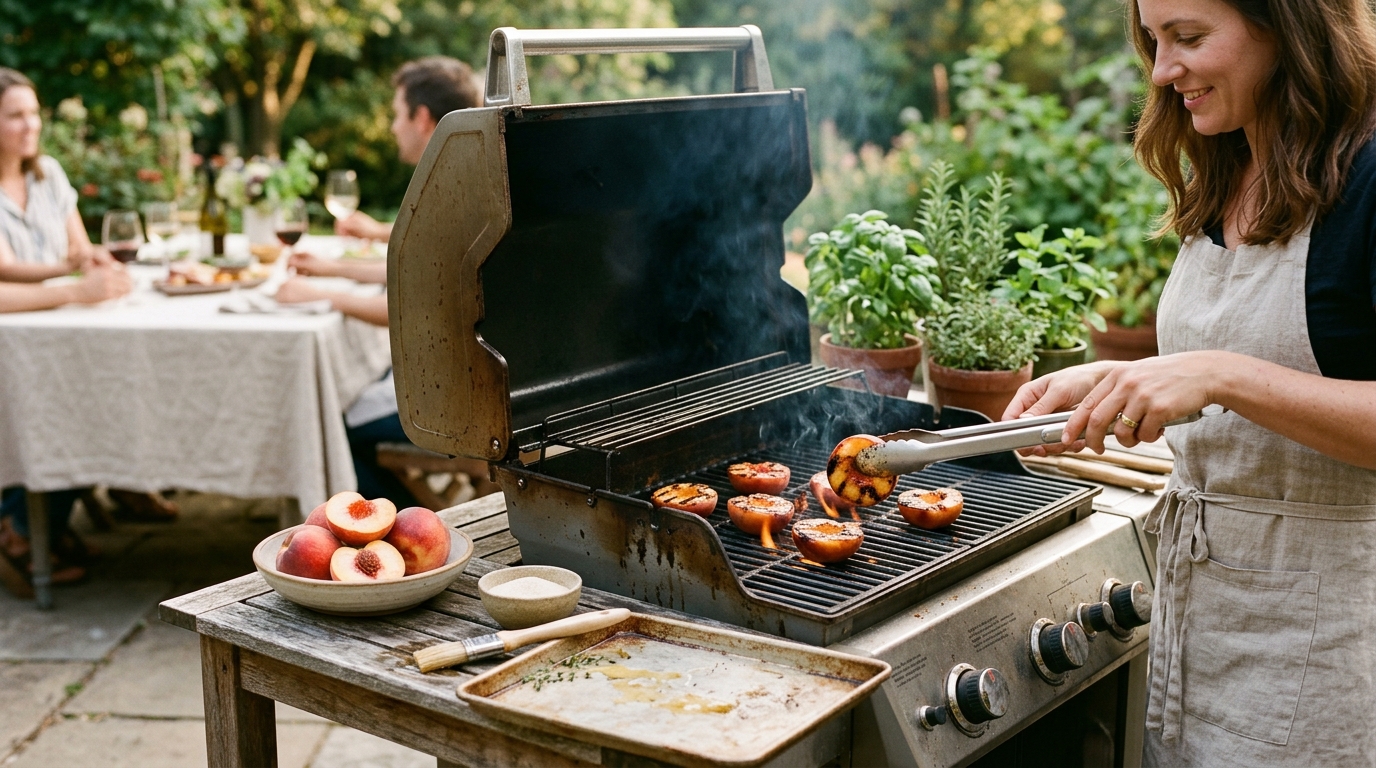
Grill peaches cut-side down at 375 to 400°F for 3 to 4 minutes until grill marks form and the sugars caramelize, then flip skin-side down for 2 to 3 minutes more. Choose freestone peaches that are fragrant and slightly firm — ripe enough to be sweet, firm enough to hold together on the grate.
Which peaches should you use for grilling?
Variety and ripeness matter more than most recipes let on. Too soft and the peach turns to mush on contact with hot grates; too firm and the flesh stays starchy rather than caramelizing into something you actually want to eat. The ideal grilling peach is fragrant, gives slightly to thumb pressure at the shoulder, and has a fully yellow or red-blushed background color with no green patches.
| Product | Best for | Rating | Notes | |
|---|---|---|---|---|
| Yellow Freestone | Best all-purpose grilling peach | ★★★★★ | The pit separates cleanly from the flesh, making halving simple. Firm texture and high natural sugar content produce excellent caramelization on the grate. Best starting point for beginners. | — |
| White Freestone | Sweetest flavor with lower acidity | ★★★★★ | More delicate flesh than yellow varieties benefits from slightly lower heat at 350°F to avoid breakdown. Outstanding for dessert presentations with honey and mascarpone. | — |
| Nectarine | Firmer texture, faster caramelization | ★★★★★ | Smooth skin and higher sugar density mean nectarines caramelize a minute faster than peaches. Treat identically on the grill but check doneness at 2 to 3 minutes on the cut side. | — |
| Donut (Saturn) Peach | Fast cook time and ultra-sweet flavor | ★★★★☆ | Flat shape and thin flesh cook through in 5 to 6 minutes total. Very sweet with honey-like notes. Hard to find outside specialty markets but exceptional when available. | — |
| Clingstone | Avoid for grilling | ★★★☆☆ | The pit is fused to the flesh, making clean halving nearly impossible before cooking. Clingy flesh tears when you try to remove the pit. Reserve clingstone peaches for canning and jam. | — |
How to tell a freestone from a clingstone at the market: Most grocery store peaches from July through September are freestone. If the label does not specify, gently press a fingernail into the flesh near the stem and try to pull a small piece away — freestone flesh separates cleanly and the pit edge is clearly defined. Clingstone flesh clings to the pit and tears rather than pulling away.
Season and sourcing: Peak peach season runs late June through late August across most of the United States. Locally grown peaches from farm stands and farmers markets ripen on the tree and have the highest sugar content. Grocery store peaches are often picked slightly underripe to survive transport — buy them a day or two ahead and ripen at room temperature on the counter. Never ripen in the refrigerator; cold temperatures halt the ripening process and destroy the texture.
What equipment do you need to grill peaches?
The gear list is short. You likely have everything needed, with one optional addition that makes the job noticeably easier.
The essentials:
- A grill capable of 375 to 400°F — gas, charcoal, or a grill pan on a side burner all work
- Long-handled tongs — for placing and flipping halves without burning your hands
- A silicone basting brush — to apply oil and optional glazes cleanly without shedding bristles onto the fruit
- A cutting board and sharp knife — for halving and removing the pit cleanly before the peach hits the grate
The helpful optional add-on:
If your grill grates have wide spacing — more than three-quarters of an inch between bars — or you are grilling many peaches at once, a grill basket prevents halves from slipping through and makes flipping a full batch in one motion.
Best for Grilling multiple peach halves without dropping them through wide grates
Stainless Steel Grill Basket for Fruit and Vegetables
A fine-mesh or small-hole stainless steel basket keeps cut fruit flat and stable over direct heat. Look for one with a folding handle so the grill lid closes fully over it and heat circulates evenly.
★★★★★ 4.5 · 1,870 reviews
Check current price on Amazon→You can also find silicone basting brushes on Amazon — heat-resistant versions rated to 450°F or higher are far more practical than natural bristle brushes, which singe and shed near an open flame.
How to prep peaches before grilling
Preparing peaches takes under five minutes. Getting the cut clean and the surface dry is the difference between caramelization and steaming.
Step 1: Wash and dry the peaches. Rinse each peach under cold water and pat completely dry with paper towels on all sides. Surface moisture creates steam between the fruit and the hot grate, delaying browning and making sticking more likely.
Step 2: Halve along the natural seam. Hold the peach firmly and cut along the natural crease that runs from stem end to base — all the way around. Twist the two halves in opposite directions to separate. One half will cradle the pit; the other will be clean.
Step 3: Remove the pit cleanly. On a freestone peach, the pit pops free with a fingertip or a gentle nudge from a spoon. If it resists slightly, use a melon baller to scoop cleanly around the pit cavity without tearing the surrounding flesh. Discard the pit.
Step 4: Brush the cut surface with oil. Apply a thin, even coat of canola or avocado oil to the cut surface of each peach half. Use a silicone brush for even coverage. Olive oil can work but has a lower smoke point — at 400°F it can impart a slightly bitter note to the caramelized fruit. Neutral oils are the better call.
Optional pre-grill glaze: A light drizzle of honey (applied after the oil) intensifies caramelization, but apply it sparingly — honey burns quickly at high heat and turns bitter before the flesh is cooked through. If using honey, reduce grill temperature slightly to 350°F and watch closely.
Step 5: Season lightly. A small pinch of flaky sea salt on the cut surface amplifies sweetness through contrast. A crack of black pepper or a pinch of cinnamon both work well for sweet applications. For savory pairings, a light dusting of smoked paprika or chili flakes is excellent.
How to set up your grill for peaches
Gas grill: Preheat all burners to medium-high for 10 to 12 minutes to reach 375 to 400°F. Clean the grates with a wire brush to remove any debris from previous cooks, then oil the grates once — fold several layers of paper towel, dip in canola oil, hold with long tongs, and wipe the full grate surface.
Charcoal grill: Light a half chimney of charcoal and wait until all coals are covered with grey ash, roughly 15 to 20 minutes. Pour into one half of the grill for a two-zone setup: direct heat on the coal side, indirect heat on the empty side. Oil the grates as above before adding peaches.
The two-zone setup advantage: With charcoal, a two-zone fire lets you move peaches to indirect heat if they begin to char before the flesh fully softens. Gas grills with front and rear burners offer the same option — keep one zone on low as your safety zone.
How to grill peaches: step-by-step
Step 1: Confirm the grill is at 375 to 400°F. Hold your hand 5 inches above the grate — at the correct temperature, you should only be able to hold it there 3 to 4 seconds before pulling away. An under-heated grate causes peaches to steam rather than caramelize.
Step 2: Place peaches cut-side down over direct heat. Set each peach half cut-side down directly over the heat source. Space them so they are not touching. Leave room between pieces — crowding traps steam and prevents the surface from browning properly.
Step 3: Cook undisturbed for 3 to 4 minutes. Close the lid and do not touch the peaches. Listen for a gentle sizzle. After 3 minutes, lift one half gently with tongs to check — you should see golden caramelization and distinct grill marks forming on the cut surface. If it sticks when you test, wait another 30 seconds; a properly caramelized surface releases naturally when the browning is complete.
Step 4: Flip to skin-side down and cook 2 to 3 minutes more. Flip each half to the skin side using tongs. The skin acts as an insulating layer that protects the flesh from direct heat and allows the interior to soften without overcooking the exterior. Close the lid and cook 2 to 3 more minutes. The skin will begin to loosen and pull away slightly at the edges — a sign the flesh has heated all the way through.
Step 5: Check for doneness. Grilled peaches have no target internal temperature. Judge by feel and appearance: the flesh feels tender when you press lightly with tongs, the cut surface shows golden-to-amber caramelization, and the skin is slightly blistered and peels away at the edges. The whole cook from cold grate to done peach is 5 to 7 minutes.
Step 6: Remove and serve immediately. Transfer grilled peach halves to a plate or platter. Serve right away — they are best while the caramelization is still glossy and the flesh is soft and warm. If you need to hold them, tent loosely with foil for up to 10 minutes.
Savory uses for grilled peaches
Grilled peaches cross easily into savory territory. The char and caramelization provide a sweet-acidic counterpoint to salty, rich, or fatty proteins.
Prosciutto: Wrap a slice of prosciutto around a warm grilled peach half and serve as an appetizer. The salt of the prosciutto and the caramelized sweetness are a classic pairing.
Burrata: Plate a grilled peach half alongside a ball of burrata, drizzle with good olive oil, scatter fresh basil, and finish with flaky sea salt and balsamic glaze. A full appetizer or first course in under 5 minutes.
Grilled pork tenderloin: Dice grilled peach flesh and mix with fresh herbs, a touch of jalapeño, and a splash of apple cider vinegar for a quick peach salsa. Spoon it over sliced pork — the acidity cuts through pork fat cleanly.
Arugula salad: Slice warm grilled peach halves over peppery arugula, shave Parmesan, add toasted walnuts, and dress with lemon and good olive oil. A complete salad with complex flavor from simple ingredients.
Blue cheese: Crumble gorgonzola or a sharp blue over a warm grilled peach half, drizzle with honey, and serve on a charcuterie board. The funky salt of the cheese cuts directly through the sweetness.
Sweet serving ideas for grilled peaches
For dessert, grilled peaches are one of the best things you can put in front of summer guests. The caramelized exterior does most of the work.
Vanilla ice cream: The most reliable pairing. A hot grilled peach half in a bowl with a scoop of vanilla bean ice cream takes under a minute to assemble and the warm-cold contrast is outstanding.
Honey and mascarpone: Spoon a dollop of mascarpone into the pit cavity of a grilled peach half, drizzle with wildflower honey, and add a pinch of flaky sea salt. A fast, elegant dessert that works at a dinner party without feeling fussy.
Balsamic glaze: A drizzle of aged balsamic or a purchased balsamic reduction over a warm grilled peach half adds acidic depth that intensifies the sweetness rather than competing with it. Finish with fresh basil and a crack of pepper.
Brown sugar cinnamon butter: In the final minute on the grill, drop a small knob of butter mixed with brown sugar and cinnamon into the pit cavity of each half. It melts into the warm fruit and creates a self-saucing effect. Serve immediately before the butter cools.
FAQ
Frequently asked questions
How long does it take to grill peaches?
Do peaches need to be ripe before grilling?
Should you peel peaches before grilling?
Can you grill canned peaches?
What temperature do you grill peaches at?
Can you grill peaches on a gas grill?
Bottom line
Grilling peaches is one of the fastest, most versatile techniques in summer cooking. Choose yellow freestone peaches that are fragrant and slightly firm, halve and oil the cut surface, and place them cut-side down on a clean grate at 375 to 400°F. Three to four minutes undisturbed builds the caramelized grill marks; a flip to the skin side finishes the cook in 2 to 3 more minutes. From there the peach works sweet — with vanilla ice cream, mascarpone, and honey — or savory alongside prosciutto, burrata, and grilled pork. A grill basket speeds up batch cooking but is far from required. The full process from prep to plate takes under 15 minutes and delivers one of the best things you can serve at a summer cookout.
For related reading: how to grill vegetables on any grill, how to grill a perfect steak, best instant-read thermometers for grilling, and best grill mats for easy cleanup.