guides
How to Clean a Grill: Complete Guide
Step-by-step guide to cleaning gas and charcoal grills. Covers grates, burners, drip pans, and seasonal deep cleaning for longer grill life.
 Cole Whitaker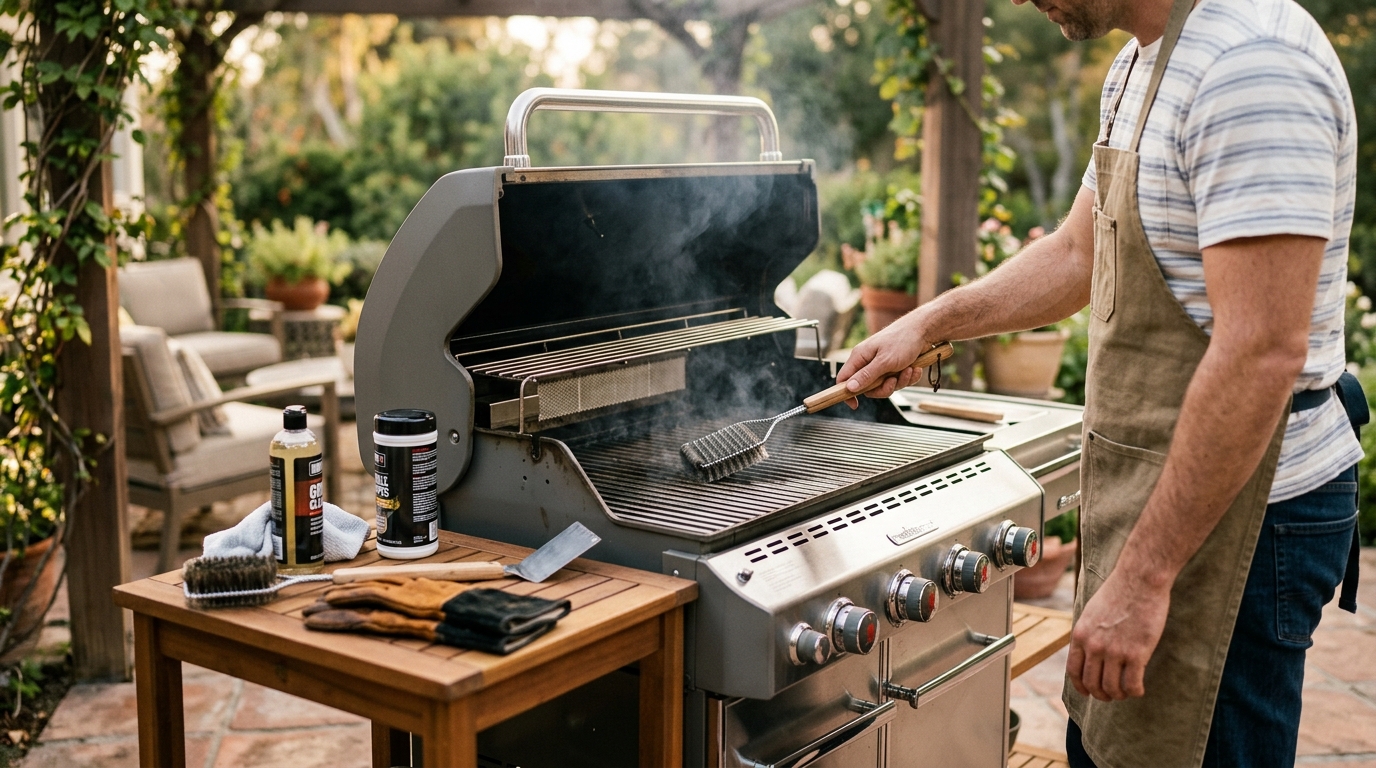
A dirty grill is not just aesthetically unpleasant — it is actively making your food taste worse. Built-up grease flares up unpredictably, carbon deposits transfer off-flavors to protein, clogged burner ports create uneven heat, and ash accumulation in a charcoal grill chokes airflow and extends light-up time. The good news: cleaning a grill is faster and less complicated than most people expect. This guide covers everything from the 5-minute post-cook wipe-down to the annual deep clean that extends grill life by years.
Why a clean grill actually matters
Most people clean their grill out of habit or because guests are coming. But there are functional reasons that directly affect cooking quality and safety.
Flavor contamination. Carbon residue from past cooks accumulates on grates and in the firebox. When heat reactivates it, those carbonized bits transfer to whatever is currently on the grill. A steak seared on clean grates tastes better than one cooked on months of built-up residue — this is not a small difference.
Hot spots and uneven cooking. On gas grills, clogged burner ports create dead zones where no flame emerges. The result: uneven heat that leaves one chicken breast undercooked while another is overdone. On charcoal grills, ash accumulation at the bottom restricts airflow through the vents, slowing the fire and making temperature control unreliable.
Grease fires. The interior of a gas grill — drip trays, flavorizer bars, grease channels — collects rendered fat over time. Heat reactivates this grease and causes unpredictable flare-ups that char food exteriors while leaving the center raw. In severe cases, the grill interior catches fire and the only solution is closing the lid and waiting it out. This is the primary safety reason to clean regularly.
Corrosion. Grease and moisture combine to accelerate rust in the firebox and on cast iron or steel grates. A clean, dry grill stored under a cover will last 15 years. The same grill with grease pooled in the drip pan through a wet winter will show active rust inside within two to three seasons.
What you need to clean a grill
You do not need specialty products for most grill cleaning tasks. Here is what actually works:
Essential tools:
- Stiff-bristle grill brush (stainless steel bundle-style or nylon — not coil-wound wire)
- Long-handled scraper or putty knife for baked-on carbon
- Dish soap and warm water
- Paper towels or rags you are willing to discard
Optional but useful:
- Grill degreaser spray (Weber Grill Cleaner, Carbona Grill Magic)
- Bucket or large bin for soaking grates
- Shop vac for ash removal in charcoal grills
- Disposable foil drip pan liners for easier grease tray cleanup
The grill brush safety note: The coil-style wire brushes — tightly-wound spirals of wire — are a documented hazard. Small wire segments break off, land on the cooking grate surface, and end up embedded in food and occasionally in people. If you use a wire brush at all, choose one with individually-welded stainless wire bundles where each bristle is secured at multiple points. Better still: switch to a bristle-free brush with stainless scraping pads or a heavy-gauge stainless coil (not fine wire) design. Nylon or brass bristle brushes are safest on porcelain-coated grates.
A top-rated bristle-free grill brush: search on Amazon
A complete grill cleaning kit with scraper: search on Amazon
Grate cleaning: the most important step
Grates are what touch your food, and they should be cleaned after every cook. The technique varies slightly by material.
| Product | Best for | Rating | Notes | |
|---|---|---|---|---|
| Cast iron grates | High-heat searing, heat retention | ★★★★★ | Brush while hot after each cook. Apply thin oil coat after cleaning. Never soak in water — rust forms within hours on bare cast iron. | — |
| Porcelain-coated grates | Easy maintenance, rust resistance | ★★★★☆ | Use nylon or brass bristle brush only — wire brushes chip the coating. Once chipped, the underlying metal rusts fast. | — |
| Stainless steel grates | Durability and dishwasher compatibility | ★★★★☆ | Most forgiving material for cleaning. Handles wire brush, soaking, and degreaser spray. Surface discoloration is normal and harmless. | — |
| Chrome-plated grates | Budget entry-level grills only | ★★★☆☆ | Plating chips with aggressive scrubbing. Use a soft brush. Replace when plating degrades noticeably. | — |
The burn-off method (fastest and most effective)
After cooking, turn all burners to high — or push remaining coals to one side on a charcoal grill — and close the lid for 10 to 15 minutes. The concentrated heat incinerates food particles and turns them to ash. Open the lid, brush the grates firmly while still hot, and shut down the grill. Total active effort: under 2 minutes.
This method works on every grate material. The heat does the hard work; the brush just sweeps away the loose ash. Doing this consistently after every cook is the single biggest thing you can do to simplify grill maintenance overall.
The soak method (for heavily soiled grates)
For grates that have not been cleaned in months:
- Remove grates and place them in a large garbage bag or utility tub.
- Add warm water to cover, plus a generous squirt of dish soap or a capful of grill degreaser.
- Soak for 30 minutes to 2 hours.
- Scrub with a brush or steel wool pad.
- Rinse thoroughly and dry completely before returning grates to the grill.
For cast iron grates after soaking: dry immediately on a burner over medium heat, then wipe a thin coat of cooking oil across the surface. Wet cast iron rusts within a day.
The aluminum foil field method
When you lack a brush: crumple a sheet of aluminum foil into a ball, grip it with long-handled tongs, and scrub the hot grates. The crumpled edges cut through carbon and grease effectively. Not a permanent replacement for a proper brush, but useful when the brush was left at home.
How to deep clean a gas grill
Schedule a full deep clean two to three times during the grilling season and once before winter storage. Budget 45 to 90 minutes for the first time through; subsequent cleanings go faster.
Step 1: Safety first. Disconnect the propane tank completely, or turn off the gas supply valve for natural gas grills. You will be removing burner components and do not want gas flowing while you work.
Step 2: Remove and clean the cooking grates. Follow the grate cleaning steps above. Soak if necessary. Let them dry completely before reinstalling.
Step 3: Clean the flavorizer bars or heat deflectors. Gas grills have metal bars or tent-shaped deflectors above the burners that catch dripping grease and vaporize it — creating that characteristic smoky flavor. These accumulate the heaviest carbon and grease in the entire grill. Remove them and brush off loose debris. Scrape baked-on material with a putty knife. For severe buildup, soak briefly in warm soapy water or apply grill degreaser spray and let it sit for 10 minutes before scrubbing.
Step 4: Clear the burners. Remove burners according to your grill’s manual (typically 2 to 4 bolts per burner). Use a narrow wire brush or pipe cleaner to clear any clogged ports along the sides of each burner tube. Clogged ports produce uneven or absent flame in that section. Also inspect the venturi tubes — the large tubes connecting each burner to the gas valve — and clear them with a venturi brush or flexible pipe cleaner. Spider webs inside venturi tubes are a common and genuinely hazardous blockage that can cause dangerous uncontrolled flames.
Step 5: Clean the firebox interior. With grates, bars, and burners removed, scrape any caked grease from the firebox floor with a putty knife. Spray with grill degreaser for heavy buildup; let it sit, then wipe down with paper towels. The goal is removing the rancid grease pool at the bottom — not sterilizing the interior. Some carbon coating on the walls is normal and harmless.
Step 6: Empty the grease management system. Every gas grill has a drip tray or grease pan below the firebox that collects rendered fat. Pull it out and empty it completely. Wash metal trays with soapy water and dry before replacing. Many grills accept disposable foil drip pan liners that make this a 30-second swap at each cleaning: search disposable grill drip pan liners on Amazon
Step 7: Wipe the exterior. Use warm soapy water and a cloth on the lid exterior and cart. For stainless steel surfaces, wipe with the grain of the metal to avoid hairline scratches. Stainless steel cleaner or polish prevents water spots and fingerprints and is worth using on premium grills.
Step 8: Reassemble and run a test burn. Reinstall burners, flavorizer bars, and grates in reverse order. Reconnect gas. Turn all burners on and confirm even, blue flame across all ports. Uneven or yellow-orange flames indicate remaining blockage in that burner. Run the grill at high heat for 5 to 10 minutes to burn off any soap residue before your next cook.
How to clean a charcoal grill
Charcoal grills are simpler machines with simpler cleaning routines — but ash management is the critical ongoing task.
After every 2 to 3 cooks: ash removal. Wait until the grill is completely cold before handling ash — at least 24 hours after the last cook. Active ash insulates coal and holds heat far longer than it looks; what appears to be cold ash can still contain live embers well into the next day.
Open the bottom vents. Stir the ash pile with a long stick to confirm it is uniformly cool. Remove the ash catcher bowl (present on most kettles and kamado-style grills), empty it into a metal container, and replace.
Never bag ash in plastic or paper bags while any warmth remains. Residual heat can melt plastic or ignite paper. Always use a dedicated metal ash bucket for disposal.
Monthly maintenance during the season:
- Remove grates and clean as described above.
- Brush out residual ash and charcoal bits from the firebox with a stiff brush or shop vac.
- Scrape carbon buildup from the lid interior with a putty knife. The black flaking that sometimes falls onto food from charcoal grill lids is carbon buildup, not paint — it accumulates unevenly and should be removed before it becomes loose enough to drop.
- Wipe down grates, lid exterior, and base with a damp cloth.
- Check that top and bottom vents open and close freely. Carbon can gum the vent mechanism; scrape clean if they feel stiff.
End-of-season deep clean: Follow all monthly steps, then:
- Scrub the firebox interior with a stiff brush and warm soapy water, rinse, and dry completely.
- Apply a very light coat of cooking oil to the exterior of a porcelain-coated bowl where the finish has small scratches — this prevents rust from developing at those points over winter.
- Store with vents cracked open slightly to prevent moisture buildup inside.
- Fit a quality grill cover before any long storage period.
A quality cover for 22-inch charcoal grills: search on Amazon
Troubleshooting common cleaning problems
Grates are heavily rusted: Scrub with steel wool or a wire brush to remove loose rust. For cast iron grates, dry completely and re-season with cooking oil applied thin, then heat at 400°F for one hour. For stainless grates, a 1:1 water-to-white-vinegar soak for 2 hours loosens heavy rust before scrubbing. Porcelain grates with widespread rust and chipping throughout cannot be restored — replace them.
White mineral deposits on firebox walls: These are calcium deposits from water, common in humid climates or where grills are left uncovered in rain. Harmless and easily removed with diluted white vinegar on a cloth.
Heavy flare-up during cooking after cleaning: If cleaning left soap residue on burners or grates, it can produce odd flames during the first cook. Run the grill at high heat with the lid closed for 10 minutes to burn it off before placing food.
Burner flames are yellow or orange: This indicates incomplete combustion from clogged ports, an air-to-gas mixture issue, or — on natural gas — a supply pressure problem. First clear all burner ports with a wire. If the issue persists after cleaning, the burner orifice or venturi may need replacement or adjustment by a qualified technician.
FAQ
Frequently asked questions
How often should I clean my grill?
Can I use oven cleaner to clean grill grates?
Can I clean grill grates in the dishwasher?
How do I get rid of the grease smell from a gas grill?
My grill grates are black and sticky. What cleans them best?
Do I need to clean a brand new grill before the first use?
How long does a properly maintained grill last?
Bottom line
A clean grill is not about aesthetics — it is about consistent food quality, safety, and protecting an investment that should last a decade or more. The core habit is straightforward: brush the grates while hot after every cook. That single 90-second step eliminates the majority of grill cleaning problems by preventing buildup before it hardens and becomes difficult to remove. Layer in a full interior deep clean a few times per season and a thorough end-of-season teardown, and the grill will perform at its best and last significantly longer than one that gets cleaned only when it becomes embarrassing.
For related reading: the best grill covers to protect your investment, our top picks for gas grills, the best charcoal grills at every price, or comparing fuel types: charcoal vs. pellet vs. gas.