roundups
Best Fire Pits of 2026: Solo Stove, Breeo, BioLite, and More
The best fire pits of 2026: smokeless, propane, and wood-burning options compared on heat output, smoke control, portability, and value.
 Cole Whitaker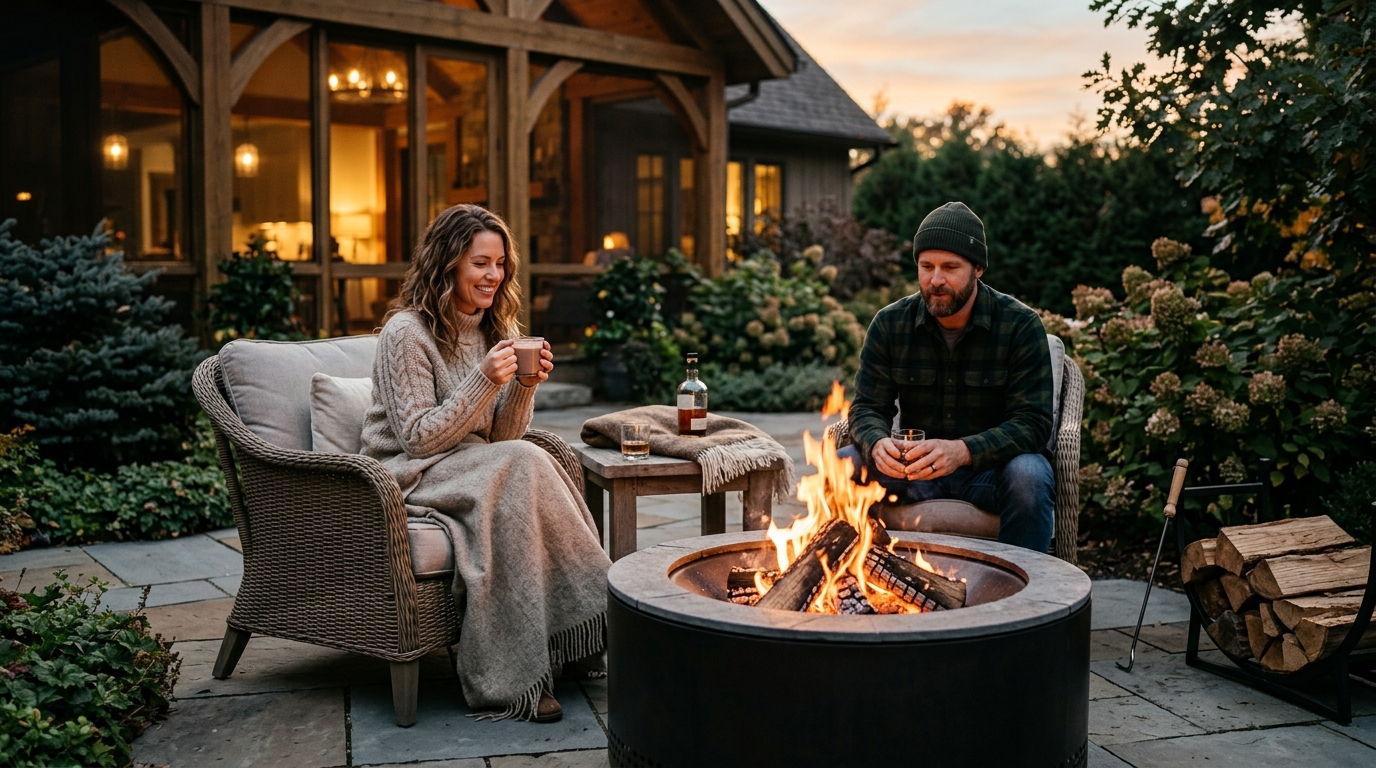
A fire pit is the difference between a backyard and a backyard worth spending time in. The category has matured significantly in the last five years: the old choice between a $50 steel ring and a $2,000 built-in gas table now has a full middle market of well-engineered products, led by the smokeless fire pit revolution. The core innovation is a double-wall design that preheats air and injects it through holes at the top of the fire chamber, creating a secondary combustion layer that burns off most of the smoke before it can escape — the result is a real wood fire that produces 80-90% less smoke than a traditional open ring.
The tradeoff with smokeless pits is cost: the engineering that makes them nearly smoke-free also puts them at $200-500 versus $100 or less for a simple ring. Propane fire tables offer zero smoke and zero ash cleanup but sacrifice the authentic wood fire experience. Budget wood-burning pits are the right call for occasional use where smoke isn’t a concern. This guide cuts through the marketing to identify the right fire pit at every price point and use case — and flags what’s not worth your money.
Quick comparison
| Product | Best for | Rating | Notes | |
|---|---|---|---|---|
| Solo Stove Bonfire 2.0 (19.5") | best smokeless wood fire pit overall; lightweight and low-maintenance | ★★★★★ | $300-350. 20 lbs. 360° airflow, secondary combustion. Stainless steel body. | Check price |
| Breeo X24 (24") | best smokeless pit for cooking; integrated grill accessory available | ★★★★★ | $450-500. 50 lbs. Double-wall corten or stainless. Outpost cooking grill sold separately. | Check price |
| BioLite FirePit+ | most adjustable smokeless pit; fan-controlled airflow via Bluetooth app | ★★★★★ | $200. 20 lbs. Battery-powered fan, USB charging, Bluetooth control. Can grill on it. | Check price |
| Outland Living Series 401 | best propane fire pit table; no smoke, no ash, zero-effort operation | ★★★★★ | $200-250. 58,000 BTU. 21" flame. Wheels, cover, carry bag included. | Check price |
| Sunnydaze Crossweave (30") | best budget wood-burning pit for occasional backyard use | ★★★★☆ | $80-110. 30" bowl, spark screen, poker, ash grate included. | Check price |
The picks
Best overall: Solo Stove Bonfire 2.0 (19.5”)
Best for anyone who wants a real wood fire with dramatically less smoke and a clean, portable stainless pit
Solo Stove Bonfire 2.0 Smokeless Fire Pit (19.5-inch)
The Solo Stove Bonfire 2.0 is the category-defining smokeless fire pit, and it earned that position through a specific engineering decision rather than marketing. The double-wall design draws cold air in through holes at the base of the outer wall, channels it upward between the walls where the fire heats it, then injects it through a ring of secondary combustion holes at the top of the fire chamber. That preheated air creates a visible ring of blue-orange secondary flames above the main fire — and those secondary flames burn the combustion gases that would otherwise become smoke. In practice, once the fire is fully established (15-20 minutes), smoke output drops to a thin wisp rather than the eye-stinging column of a traditional open ring. The 2.0 version adds a removable ash pan — the most-requested upgrade from the original Bonfire — that makes cleanup a matter of lifting out the pan, dumping the ash, and wiping the interior. At 20 lbs, the Bonfire 2.0 is genuinely portable; it packs into its included carry bag for trips to campsites, beach days, or a neighbor's yard. The 19.5-inch diameter and 16-inch burning height handle 4-5 people seated around it comfortably. Stainless steel 304 construction handles years of weather without rust. At $300-350, it's a serious purchase — but one that delivers on the smokeless promise rather than approximating it.
★★★★★ 4.8 · 14,200 reviews
Check current price on Amazon→Pros
- Secondary combustion ring burns off 80-90% of smoke once the fire reaches full temperature
- Removable ash pan (2.0 upgrade) makes cleanup fast — no scraping the bowl between uses
- 20 lbs with carry bag — genuinely portable for camping, beach use, or backyard events
- 304 stainless steel body resists rust through rain and seasons without a cover
- Large accessory ecosystem: cooking rings, shields, stands, lids, and fire starters available
Cons
- $300-350 is a significant step up from a $100 budget ring
- Cooking add-on sold separately — the Bonfire Cooking System is another $70-100
- Secondary combustion only activates once the fire is fully established; first 15-20 minutes produces normal smoke
- Sized for 4-5 people; the larger Yukon (27") is needed for groups of 6-8 at $550+
Best for cooking: Breeo X24 (24”)
Best for outdoor cooks who want a smokeless fire pit they can also cook on — steaks, skewers, Dutch oven meals
Breeo X24 Smokeless Fire Pit (24-inch)
The Breeo X24 competes directly with the Solo Stove Bonfire in smokeless performance, then differentiates through a design philosophy built around cooking. The 24-inch fire bowl (versus 19.5 inches for the Bonfire) provides meaningfully more fire and heat mass, and the flat lip that surrounds the fire chamber — the SearPlate — is solid stainless steel that retains heat from the fire below. That SearPlate surface reaches 400-600°F during a steady burn, functioning as a flat-top griddle surface where you can cook eggs, sear steaks, sauté vegetables, and warm cast iron without any additional accessories. The optional Outpost cooking grill ($150-200) drops a height-adjustable swing arm into the fire bowl center post, suspending a grill grate over the active fire for direct-flame grilling. In corten steel finish, the Breeo develops a natural rust patina over the first few months of outdoor exposure that stabilizes and actually improves resistance to further corrosion — similar to a well-seasoned wok. At 50 lbs, the X24 is not portable in the same way as the Solo Stove, but it includes a carry handle and can be moved between sites with two people. At $450-500 for the pit alone, it's priced as an investment piece, but the integrated SearPlate and cooking capability justify the premium over the Bonfire for households that want a true outdoor cooking station.
★★★★★ 4.7 · 3,800 reviews
Check current price on Amazon→Pros
- Integrated SearPlate rim reaches 400-600°F — functional as a flat-top cooking surface without add-ons
- 24-inch bowl provides more heat and fire mass than 19.5-inch competitors
- Corten steel finish develops a protective patina over time — requires no cover or maintenance
- Optional Outpost grill accessory turns it into a full over-fire cooking station
- Double-wall design delivers smokeless performance comparable to Solo Stove
Cons
- 50 lbs — move-able with two people but not a backpack-portable carry-on-a-trip option
- Outpost cooking grill is a separate $150-200 purchase — the base pit doesn't include it
- $450-500 is the highest price point in the smokeless segment
- Corten patina requires a few months of weather exposure; some buyers dislike the initial rusted appearance
Best adjustable smokeless: BioLite FirePit+
Best for campers and backyard users who want app-controlled airflow to tune flame height and smoke level on demand
BioLite FirePit+ Smokeless Fire Pit with Bluetooth
The BioLite FirePit+ takes a different approach to smoke reduction than Solo Stove and Breeo: instead of passive double-wall convection, it uses an internal battery-powered fan to force-feed air into the fire chamber from below, controlling combustion intensity electronically. The result is adjustable: through the BioLite app over Bluetooth, you set the fan speed anywhere from a quiet low (small, mellow flames, minimal smoke) to maximum (roaring fire, maximum heat output). In practice, the forced-air approach creates a more responsive fire than passive designs — when you increase fan speed, flame height rises within 30 seconds. The fan runs 8-30 hours on a single charge depending on speed, and the FirePit+ includes a USB-A port that lets you charge a phone from the battery bank built into the unit. The removable grill grate makes it a functional outdoor cooker at 20 lbs — lighter than the Breeo X24 and actually portable for camping. The trade-off is reliance on the battery: if the battery dies during a cook, you're left with passive airflow that doesn't match Solo Stove's passive performance. At $200, the FirePit+ is priced between the budget and premium tiers and delivers a genuinely different experience — more technologically engaged than a passive stove.
★★★★★ 4.5 · 5,600 reviews
Check current price on Amazon→Pros
- Bluetooth app control lets you tune fan speed (and thus flame height and smoke) in real time
- Built-in USB-A port charges phones and small devices from the integrated battery
- 20 lbs with a removable grill grate — portable enough for camping and overlanding
- Forced-air design responds quickly to fan speed adjustments; no waiting for natural airflow to equilibrate
- $200 is competitive pricing for an app-connected, cooking-capable smokeless pit
Cons
- Battery-dependent: passive airflow performance drops if battery runs out mid-use
- Bluetooth range limits app control to phone proximity — not a concern for most use cases, but noted
- Fan mechanism adds a component that can fail; passive designs like Solo Stove have no moving parts
- Smaller fire bowl than Breeo X24 limits maximum fire size and heat output
Best propane fire pit: Outland Living Series 401
Best for patios, campsites, and any situation where zero smoke, zero ash cleanup, and instant-on operation matter more than a wood fire
Outland Living Series 401 Portable Propane Fire Pit
The Outland Living Series 401 is the most practical fire pit for people who want ambiance without the commitment of wood management. Connect a standard 20 lb propane tank (not included), open the valve, push the igniter, and you have a 21-inch diameter ring of flame in 10 seconds — no splitting wood, no fire-starting ritual, no ash cleanup when you're done. The 58,000 BTU output is substantial enough to generate real warmth for four to six people seated at standard patio chair distance. The flame height adjusts via a manual regulator from a small accent flame to an impressive 6-8 inch display. The unit sits at a table height that makes it usable as a patio table between burns, and the included weather-resistant cover protects it when not in use. The lava rock fill (included) distributes heat evenly across the flame ring and provides the visual of burning embers without the fire management. Wheels allow repositioning on a deck or patio surface without lifting the 20-lb unit. At $200-250, the Series 401 is competitively priced against the lowest-tier smokeless wood pits but delivers the zero-maintenance experience that makes backyard evenings effortless. The tradeoff is simple: you lose the crackling, the wood smoke smell, and the ritual of tending a fire — for some buyers, those are features, not bugs.
★★★★★ 4.6 · 9,200 reviews
Check current price on Amazon→Pros
- Zero smoke, zero ash — connects to a standard 20 lb propane tank and lights in 10 seconds
- 58,000 BTU output generates real warmth for 4-6 people at patio chair distance
- Adjustable flame height via manual regulator — from accent flame to 6-8 inches
- Wheels and included carry bag make it genuinely portable for camping and tailgating
- Weather-resistant cover and lava rock included — no extra purchases needed to start
Cons
- No wood fire experience: no crackling sound, no wood smoke aroma, no fire-tending ritual
- Propane tank (20 lbs) sold separately — adds $25-35 per fill, plus you need to manage tank supply
- Not suitable for cooking — gas diffuser plate is not designed for food contact or grilling use
- Flame can blow out in sustained winds above 15-20 mph without a windscreen
Best budget: Sunnydaze Decor Crossweave (30”)
Best for occasional backyard fires where budget matters more than smokeless performance or portability
Sunnydaze Decor Crossweave Outdoor Steel Fire Pit (30-inch)
The Sunnydaze Crossweave is a 30-inch steel bowl fire pit that does exactly what a traditional fire pit is supposed to do: it holds a wood fire safely, keeps sparks contained, and creates a place to gather — all for $80-110. The 30-inch bowl is genuinely large enough to build a substantial fire for six to eight people, and the decorative cutout pattern in the steel walls creates pleasant light patterns on surrounding surfaces after dark. The included mesh spark screen is essential — it covers the full bowl opening and keeps embers from reaching the deck or grass. A steel poker and log grate are included at that price, which means the full kit is ready to use out of the box. The steel walls are powder-coated for basic weather resistance, though they will eventually rust at the base welds with sustained outdoor exposure — this is a 3-5 season product with proper storage and a cover, not a lifetime buy. The lack of any smoke reduction technology means this is a genuine trade-off: on a still evening the smoke is pleasant; on a shifting-wind evening, it will find every person seated around the fire. For buyers who light a fire four to six times a year and aren't spending the night next to it, the Crossweave is the honest budget answer.
★★★★☆ 4.4 · 6,800 reviews
Check current price on Amazon→Pros
- 30-inch bowl builds a substantial fire for 6-8 people — larger than most pricier smokeless pits
- Spark screen, log grate, and poker included — complete kit at $80-110
- Decorative cutout pattern creates appealing light effects after dark
- No assembly complexity — bowl, legs, and screen install in under 10 minutes
Cons
- No smokeless technology — smoke output follows the wind and will move toward seated guests
- Powder-coated steel rusts at base welds within 3-5 seasons without diligent storage and covering
- Not portable — 30-inch steel bowl at roughly 22 lbs is awkward to transport and has no carry solution
- No ash management system — ash cleanup requires a shovel and a bucket
What to skip
-
Tabletop gel fuel fire pits. A popular gift item at $30-80, gel fuel fire pits use canned alcohol gel to produce a small flame inside a decorative bowl. Output is roughly 2,500-3,000 BTU — not enough to warm a hand from 3 feet away. They are candles in a bowl, not fire pits. If you want a table-level fire accent, a quality pillar candle on a fireproof plate delivers similar ambiance at no fire risk and without spending $60.
-
Budget propane fire tables under $150. Several imported propane fire tables in the $100-150 range use thin steel pan burners with minimal BTU output and lava rock fill that either doesn’t ignite evenly or smells of chemicals in the first few uses. The gas fittings on the lowest-tier units have a documented history of connection issues and regulator failures. The Outland Living Series 401 at $200-250 represents the reliable entry point in propane; below that, the failure rates and safety concerns are not worth the savings.
-
Oversized decorative fire pits for small decks. A 36-40 inch fire ring on a 12x12 composite deck is a fire hazard. The ember and heat radius from a large open fire in a non-smokeless pit extends 4-6 feet, and composite decking ignites at lower temperatures than wood. Either size down to a contained smokeless pit with a secondary combustion ring, or ensure you have substantial clearance (6+ feet on all sides) between the fire and any combustible surface.
-
Chimineas for primary patio use. Front-opening clay or cast-iron chimineas have genuine appeal for smaller fires and wind protection, but they direct heat at one side rather than radiating outward to a circle of people. They’re also fragile — a single thermal shock crack on a clay chiminea from rain on a hot surface ends its useful life. For a dedicated fire gathering point, a bowl-style fire pit radiates heat uniformly to all seated guests.
FAQ
Frequently asked questions
Do smokeless fire pits actually work? How much smoke do they really reduce?
Solo Stove Bonfire vs Breeo X24 — which should I buy?
Can I use a fire pit on a wood deck or composite deck?
What wood burns best in a smokeless fire pit?
How do I clean ash out of a smokeless fire pit?
Is a fire pit worth buying versus just digging a ring in the ground?
Bottom line
Best overall: Solo Stove Bonfire 2.0 ($300-350) — the benchmark smokeless fire pit, 20 lbs, removable ash pan, and the largest accessory ecosystem in the category. Best for cooking: Breeo X24 ($450-500) — integrated SearPlate cooking rim, 24-inch bowl, and optional Outpost grill for a full over-fire cooking station. Best adjustable: BioLite FirePit+ ($200) — battery-powered fan and Bluetooth app control for on-demand flame and smoke adjustment, plus a built-in USB charger. Best propane: Outland Living Series 401 ($200-250) — 58,000 BTU, zero smoke and zero ash, wheels included, genuinely portable. Best budget: Sunnydaze Crossweave 30” ($80-110) — a complete traditional fire pit kit for occasional use without premium pricing.
For most households who want a dedicated fire gathering spot they’ll actually use, the Solo Stove Bonfire 2.0 is the right answer. Buyers who prioritize cooking over the fire choose the Breeo X24. Buyers who want zero fire management choose the Outland Living propane table.
Round out your outdoor setup: best charcoal grills, best kamado grills, best outdoor kitchen, or best pizza ovens.